

Choosing the cheapest wall base to save on a project budget often leads to the most expensive repair bills within two years. You've likely seen vinyl base crack or dish in cold environments, or watched material turn white and snap while trying to wrap a tight corner. You understand that a professional finish depends on more than just aesthetics; it's about how a material performs under the daily pressure of foot traffic and maintenance equipment.
This guide helps you master the technical nuances of the rubber vs vinyl cove base comparison to ensure your next project stays on schedule. We'll provide a clear decision framework based on 2026 indoor air quality standards and material durability. You'll learn which adhesive and material combinations prevent long-term failure, allowing you to balance budget constraints with the need for a scuff-resistant, professional result. We'll examine everything from PVC-free trends to the specific installation mechanics that separate a successful build from a costly callback.
Key Takeaways
- Identify the specific ASTM F-1861 material types to ensure your wall base meets commercial performance and safety standards.
- Determine if the rubber vs vinyl cove base price gap is justified for your project by analyzing long-term scuff resistance and UV stability.
- Learn the professional techniques for wrapping corners and selecting adhesives that prevent material failure in cold or high-traffic zones.
- Apply a Total Cost of Ownership framework to justify material choices that reduce maintenance and future replacement costs.
- Understand how sourcing contractor-grade inventory prevents common issues like color mismatching and material cracking found in retail products.
Understanding Cove Base Materials: Rubber vs. Vinyl Basics
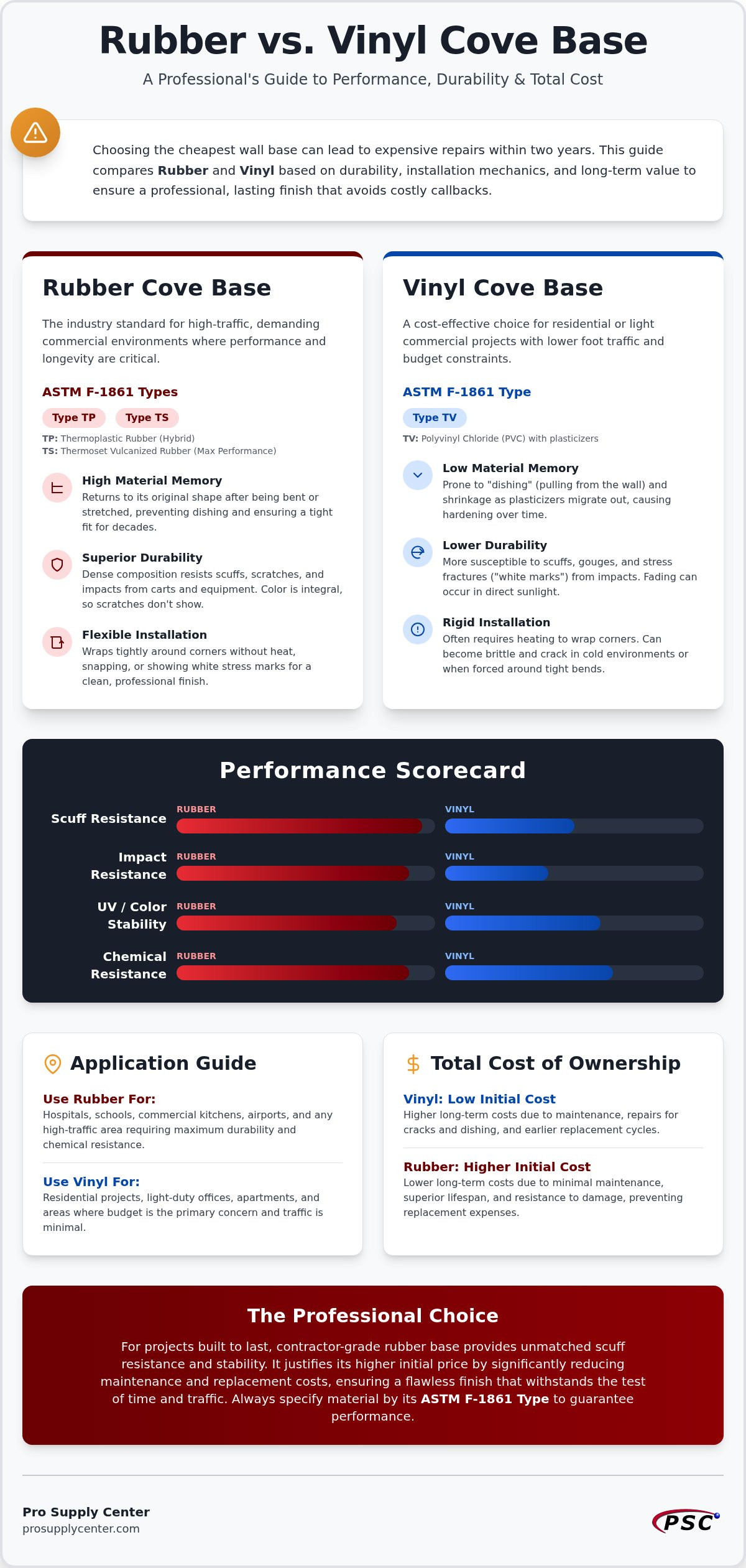
Cove base is more than just decorative molding; it serves as a functional barrier at the critical junction where the wall meets the floor. Its primary purpose is to protect the wall substrate from moisture, impact, and the chemicals used during routine floor maintenance. When selecting materials for a project, professionals rely on the ASTM F-1861 standard, which classifies products into three distinct categories: Type TV (Vinyl), Type TP (Thermoplastic Rubber), and Type TS (Thermoset/Vulcanized Rubber).
A defining technical factor in the rubber vs vinyl cove base debate is "material memory." This term describes a material's ability to return to its original manufactured shape after being bent or stretched. Rubber has high memory, while vinyl has almost none. This physical property dictates how well the base will hold its form over decades of use, especially in environments with fluctuating temperatures. By 2026, the industry has also moved toward phthalate-free and low-VOC formulations to comply with stricter indoor air quality standards, though the physical performance gap between the materials remains significant.
Vinyl Wall Base (Type TV) Characteristics
Type TV base is manufactured from polyvinyl chloride (PVC) and mixed with plasticizers to achieve the necessary flexibility for installation. It remains a popular choice for residential builds and light commercial projects because it offers the lowest initial material cost. You can find it in an extensive range of colors and profiles. However, vinyl is susceptible to "dishing," where the center of the base pulls away from the wall, and shrinkage. These failures usually happen because the plasticizers migrate out of the material over time, causing the PVC to harden and contract.
Rubber Wall Base (Type TP and TS) Characteristics
Rubber options provide a more stable and durable solution for high-traffic areas. Thermoplastic Rubber (Type TP) acts as a hybrid, blending the properties of rubber and plastic to offer better flexibility than vinyl at a mid-range price point. For maximum performance, Thermoset Vulcanized Rubber (Type TS) is the industry standard. Because it is chemically cured through heat, it will not shrink or lose its shape over time.
The inherent memory of vulcanized rubber allows it to wrap tightly around outside corners without snapping or showing white stress marks. This flexibility ensures a seamless finish that doesn't require the aggressive heating often needed for vinyl. It provides superior scuff resistance against heavy carts and equipment, making it the preferred choice for hospitals, schools, and commercial kitchens where long-term reliability is mandatory.
Performance Comparison: Durability, Scuff Resistance, and Longevity
The daily reality of a commercial or high-traffic residential job site puts immense pressure on wall finishes. Heavy equipment, rolling carts, and constant foot traffic will quickly expose the weaknesses of a substandard installation. Selecting between a rubber vs vinyl cove base determines whether your project will maintain its integrity or show unsightly wear within the first year. Scuff resistance is the ability of a material to withstand friction without surface degradation. Rubber excels in this area because its dense, resilient composition resists the shearing force of rubber soles and equipment wheels better than plastic-based alternatives.
Color stability and chemical resistance are equally vital for long-term performance. Many vinyl bases rely on surface dyes that can fade or discolor when exposed to direct sunlight in lobbies or storefronts. In contrast, rubber is typically colorfast throughout its entire thickness, ensuring that even deep scratches don't reveal a different core color. This level of durability aligns with ASTM standards for rubber flooring, which define strict requirements for wear resistance. In healthcare or industrial settings, rubber's chemical resistance prevents the material from softening or bleaching when exposed to the harsh disinfectants required for sanitation.
Impact and Abrasion Resistance
Rubber effectively acts as a shock absorber for your walls. When a floor buffer or heavy vacuum cleaner strikes the base, rubber deflects the energy without permanent deformation. Vinyl is more brittle; high-velocity impacts often result in "white marks" or stress fractures that are impossible to repair. Another critical factor in the rubber vs vinyl cove base decision is UV stability. Rubber remains stable in sunlit environments where vinyl might become brittle over time.
A professional finish also requires proper substrate preparation. A useful contractor tip is to use professional grade abrasives for floor prep before the base is installed. Removing old adhesive residue and smoothing the junction ensures the new base lays flat and bonds securely, preventing the wavy appearance often seen in rushed installations.
Moisture and Waterproofing Integration
Cove base serves as the final line of defense against mop water seeping into the wall substrate. While vinyl can dish or pull away from the wall, creating moisture traps, rubber maintains a tighter, more consistent seal. This is especially important when the base is used in conjunction with a high-performance underlayment like the PSC Pro Gen II Waterproofing System. For wet-mopped areas, always specify a "toe" profile. The toe curves outward to cover the expansion gap between the floor and the wall, directing water away from the wall cavity and toward the floor drain.
Choosing the right material ensures the integrity of your waterproofing layers remains protected for years to come. You can explore our full range of professional-grade cove base trim to find the ideal material for your specific traffic and moisture requirements.
Installation Logistics: Handling Corners and Adhesive Requirements
The success of a wall base installation often hinges on how the material behaves at transitions. In the technical comparison of rubber vs vinyl cove base, installation logistics reveal the most significant labor-cost differences. Installers frequently struggle with outside corners, where material must wrap a 90-degree angle without gapping or showing signs of stress. While vinyl base is often lighter, its chemical composition makes it highly temperature-sensitive. In colder job-site conditions, vinyl stiffens significantly; this makes it difficult to manipulate without specialized tools or localized heat.
To achieve results that meet professional installation standards, installers must prioritize wall preparation and material acclimation. Ensuring the substrate is clean and free of old adhesive dust is non-negotiable for a permanent bond. For large commercial corridors, using 4 inch cove base rolls is a standard practice to minimize unsightly seams. Reducing the number of joints not only improves the aesthetic but also lowers the potential for material lift over time.
Outside Corners: Scoring vs. Wrapping
Vinyl wall base usually requires a heat gun or back-scoring to bend around an outside corner. Without these steps, the material tends to pull away from the wall as it cools, creating a gap that collects dirt and moisture. A common failure in vinyl is "stress whitening," where the plasticizers and dyes react to the tension of the bend. This leaves a permanent white line on darker colored bases. Rubber possesses inherent flexibility and memory. It wraps tightly around corners with minimal effort and maintains a tight radius without the need for aggressive heating. This flexibility reduces installation time and eliminates the risk of ruining material during the bending process.
Adhesive Selection and Bonding
The bond strength of an installation depends on matching the adhesive to both the base material and the substrate. Porous surfaces like standard drywall absorb moisture differently than non-porous surfaces like metal or sealed masonry. Acrylic-based adhesives are standard for most drywall applications, but solvent-based options are often required for non-porous substrates or high-moisture environments.
Selecting the wrong adhesive often leads to "dishing" or complete bond failure within months. For specific bond-strength data and application rates, refer to our Professional Cove Base Adhesive Installation guide. This technical resource helps contractors avoid callbacks by ensuring the material remains secured regardless of the environment's traffic level or humidity fluctuations.
Application Selection: Matching Material to the Environment
Selecting the right material requires a cold evaluation of the environment's traffic and long-term maintenance expectations. While the upfront cost of vinyl is attractive, the "Total Cost of Ownership" (TCO) often tips the scale toward rubber in commercial settings. If a material needs replacement every five years due to cracking or scuffs, the labor costs of the second installation quickly erase any initial savings. Aesthetic preferences also play a role in the rubber vs vinyl cove base decision. Rubber typically features a matte finish that hides wall irregularities, whereas vinyl has a slight sheen that can highlight imperfections in the wall substrate.
For developers focusing on multi-family housing or large-scale residential projects, vinyl wall base molding remains the industry standard for balancing cost and utility. It provides a clean finish in controlled environments where heavy equipment or carts aren't a factor. Understanding the specific demands of each room allows you to allocate your budget where it will have the most impact on the project's longevity.
When to Choose Vinyl Wall Base
Vinyl is most effective in short-term leases or residential rental units where the primary goal is a fresh, clean look at a low price point. It works well in climate-controlled environments where the material won't be subjected to extreme temperature swings that cause shrinking or dishing. You should choose vinyl when:
- The project is a residential flip or a standard rental turn.
- You need a specific, non-standard color on a restricted budget.
- Foot traffic is minimal and physical impacts from heavy machinery are unlikely.
- The environment is strictly climate-controlled year-round.
When to Choose Rubber Wall Base
Rubber is the logical choice for high-traffic commercial corridors such as hospitals, schools, and airports. Its ability to withstand constant cleaning and physical abuse makes it indispensable for facilities managers. In spaces like commercial kitchens or vestibules where temperatures fluctuate, rubber's stability prevents the expansion and contraction issues that plague plastic-based products. You should choose rubber when:
- The environment requires the highest level of hygiene and scuff resistance.
- You are working in a space with fluctuating temperatures or high humidity.
- The client prioritizes long-term durability and lower maintenance over the lowest initial bid.
- The project involves heavy rolling loads or frequent use of floor buffers.
Matching the material to the actual demands of the job site ensures the finish lasts as long as the floor itself. You can browse our complete inventory and order professional-grade cove base trim today to secure the right material for your next project.
Sourcing Professional Grade Cove Base for 2026 Projects
Sourcing materials from a dedicated supply center is a strategic choice that impacts the final quality of a build. Big-box retail options often prioritize general consumer needs, which can lead to stock that lacks the technical durability required for commercial environments. When you evaluate the rubber vs vinyl cove base options for a large-scale project, you need materials that meet rigorous ASTM F-1861 standards. Professional supply centers provide access to contractor-grade inventory, ensuring that the base you install today won't fail or discolor due to manufacturing shortcuts common in consumer-grade products.
Pro Supply Center supports commercial contractors and residential developers by providing a steady supply of high-performance materials. Beyond trim, we offer a complete finishing ecosystem. You can integrate professional touches like ceramic soap dishes or shower niches to ensure a cohesive, high-end result across bathrooms and utility areas. Our focus remains on utility and functional reliability, helping you move from the waterproofing phase to the final trim installation without switching vendors or compromising on quality.
Ensuring Batch Consistency
A major risk with lower-end vinyl products is dye lot variation. If your order comes from multiple manufacturing batches, you may notice subtle color shifts that become glaringly obvious once the material is installed under professional lighting. Purchasing professional-grade rubber cove base trim significantly reduces this risk. Rubber's manufacturing process allows for superior color depth and consistency across large volumes, which is essential for multi-floor commercial builds.
To keep your project on schedule, always follow the 5-10% rule for overage. This margin accounts for waste during corner cuts, mistakes during the scoring process, and future repairs. Having a small amount of material from the same batch on hand is the best insurance against future maintenance challenges. It prevents the need to source a matching color years later when the original dye lot is no longer available.
The Pro Supply Center Advantage
We function as more than a warehouse; we are a technical resource for your crew. Our inventory is curated based on job-site performance, meaning we only stock materials that have proven their durability against heavy foot traffic and harsh cleaning chemicals. We understand the nuances of the rubber vs vinyl cove base trade-off and can provide specific guidance on which adhesives work best for your unique substrate.
Efficiency is the priority for any 2026 commercial build. We offer nationwide shipping capabilities to ensure your materials arrive directly at the job site when they are needed. This logistics support keeps your team focused on the installation rather than chasing down local inventory. By combining expert technical support with a direct-to-site supply chain, we help you maintain project timelines and reduce the likelihood of costly callbacks.
Executing a Durable Finish on Every Project
Deciding on the rubber vs vinyl cove base for your project comes down to balancing immediate costs against the long-term integrity of the installation. While vinyl provides a cost-effective solution for residential units, rubber remains the standard for high-traffic commercial environments where scuff resistance is non-negotiable. It's about matching your chosen material to the correct adhesive and ensuring batch consistency across the entire order to avoid unsightly variations.
By prioritizing contractor-grade durability, you'll reduce the risk of material failure and future callbacks. Pro Supply Center provides the steady support your crew needs through expert technical advice and nationwide shipping on all flooring and waterproofing supplies. Whether you're finishing a residential rental or a complex commercial corridor, the right material selection protects the integrity of your build from day one.
Browse Professional Cove Base & Trim at Pro Supply Center to secure the high-performance materials your next project deserves. We're ready to help you achieve a stable, professional finish that lasts.
Frequently Asked Questions
Is rubber cove base significantly more expensive than vinyl?
Rubber base has a higher initial material cost compared to vinyl. While vinyl is the most budget-friendly option for residential rentals, rubber is a better long-term investment for commercial spaces. The total cost of ownership for rubber is often lower because it resists scuffs and doesn't require frequent replacement. Choosing between rubber vs vinyl cove base usually depends on whether you prioritize low upfront costs or long-term durability.
Can I install rubber cove base over existing vinyl adhesive?
You shouldn't install new base over old adhesive residue. To ensure a permanent bond, you must strip the wall substrate down to a clean, flat surface. Leaving old adhesive can cause lumps in the new trim or lead to complete bond failure within months. Use professional-grade abrasives to smooth the wall junction and remove any dust or oils before applying a fresh layer of acrylic or solvent-based adhesive.
Which material is better for wrapping tight outside corners?
Rubber is the superior choice for wrapping outside corners due to its inherent flexibility and material memory. It bends easily around 90-degree angles without snapping or showing white stress marks. Vinyl is much stiffer and often requires a heat gun or back-scoring to prevent it from pulling away from the wall. If your project has many architectural columns or tight turns, rubber will save significant labor time during the installation process.
Does vinyl cove base shrink over time?
Vinyl is susceptible to shrinkage as the plasticizers within the material migrate out over several years. This process causes the base to harden and pull away from seams, often resulting in "dishing" where the center of the trim curves inward. Rubber, particularly vulcanized Type TS, is chemically cured and remains dimensionally stable. It won't shrink or lose its shape, even when exposed to the temperature fluctuations common in commercial vestibules.
Is rubber cove base easier to clean than vinyl?
Rubber is generally easier to maintain in high-traffic environments because it is highly resistant to chemicals and scuffing. Its matte finish effectively hides minor scratches and water spots that might be visible on the slight sheen of a vinyl base. While both materials can be wiped down with standard cleaners, rubber handles the aggressive disinfectants used in hospitals and industrial kitchens without softening, bleaching, or losing its original color depth.
What is the standard height for commercial cove base?
The industry standard for commercial installations is 4 inches. This height provides a sufficient barrier against mop water, vacuum cleaners, and rolling carts. While 2.5-inch options are common in residential bathrooms and 6-inch bases are used in high-impact industrial zones, the 4-inch profile offers the best balance of protection and aesthetics. Most professional-grade 4-inch rolls are designed to minimize seams and provide a clean, continuous look across long corridors.
Can I use cove base in a wet-room or shower area?
Cove base is suitable for the transition areas outside of a shower but shouldn't be the primary waterproofing layer inside a wet zone. For a leak-proof shower, you must use a dedicated system like the PSC Pro Gen II Waterproofing System. Cove base with a "toe" profile is excellent for the perimeter of a bathroom floor because it creates a tight seal that prevents mop water from seeping into the wall cavity.
Do I need a heat gun to install vinyl cove base?
A heat gun is almost always necessary for a professional vinyl installation, especially at outside corners. Without localized heat, vinyl is too rigid to wrap around corners without gapping or cracking. Applying heat makes the PVC pliable, allowing it to conform to the wall's shape. Rubber doesn't require this extra step, as it remains flexible at room temperature. This difference in handling is a major factor when comparing rubber vs vinyl cove base labor needs.


