

The standard industry requirement to use unmodified thin-set for membrane installations is a bottleneck that often compromises the integrity of modern tile work. You've likely felt the frustration of choosing between a manufacturer's warranty and the superior mechanical bond provided by polymer-modified mortars. The PSC Pro Gen II Waterproofing System changes this dynamic by allowing professionals to use high-performance modified thin-sets without risking system failure. This approach ensures that your installations aren't just waterproof; they're structurally optimized for the heavy, large-format tiles that dominate today's market.
Mastering this system means you can deliver a maintenance-free, vapor-tight shower environment in less time than traditional methods require. In this professional reference guide, we'll examine the technical specifications and installation advantages that make the Gen II a superior choice for the modern contractor. We'll cover everything from the friction-fit grates with integrated hair traps to the versatile drain flange options available in both ABS and PVC. By the end of this article, you'll have a clear roadmap for achieving leak-proof results that stand up to the rigors of daily use while significantly simplifying your workflow on the job site.
Key Takeaways
- Understand how the PSC Pro Gen II Waterproofing System evolves beyond traditional pan liners to provide a modern, bonded moisture management solution.
- Identify the correct drain flange material for your plumbing stack and learn the benefits of the screw-free, friction-fit grate design.
- Gain technical insights into using high-performance modified thin-set mortars to achieve a superior bond without voiding system warranties.
- Follow professional best practices for substrate preparation and membrane embedding to ensure a completely vapor-tight shower environment.
- Learn to integrate shower niches and ceramic hardware into your build without compromising the waterproof seal or requiring complex framing.
Understanding the PSC Pro Gen II Waterproofing System Architecture
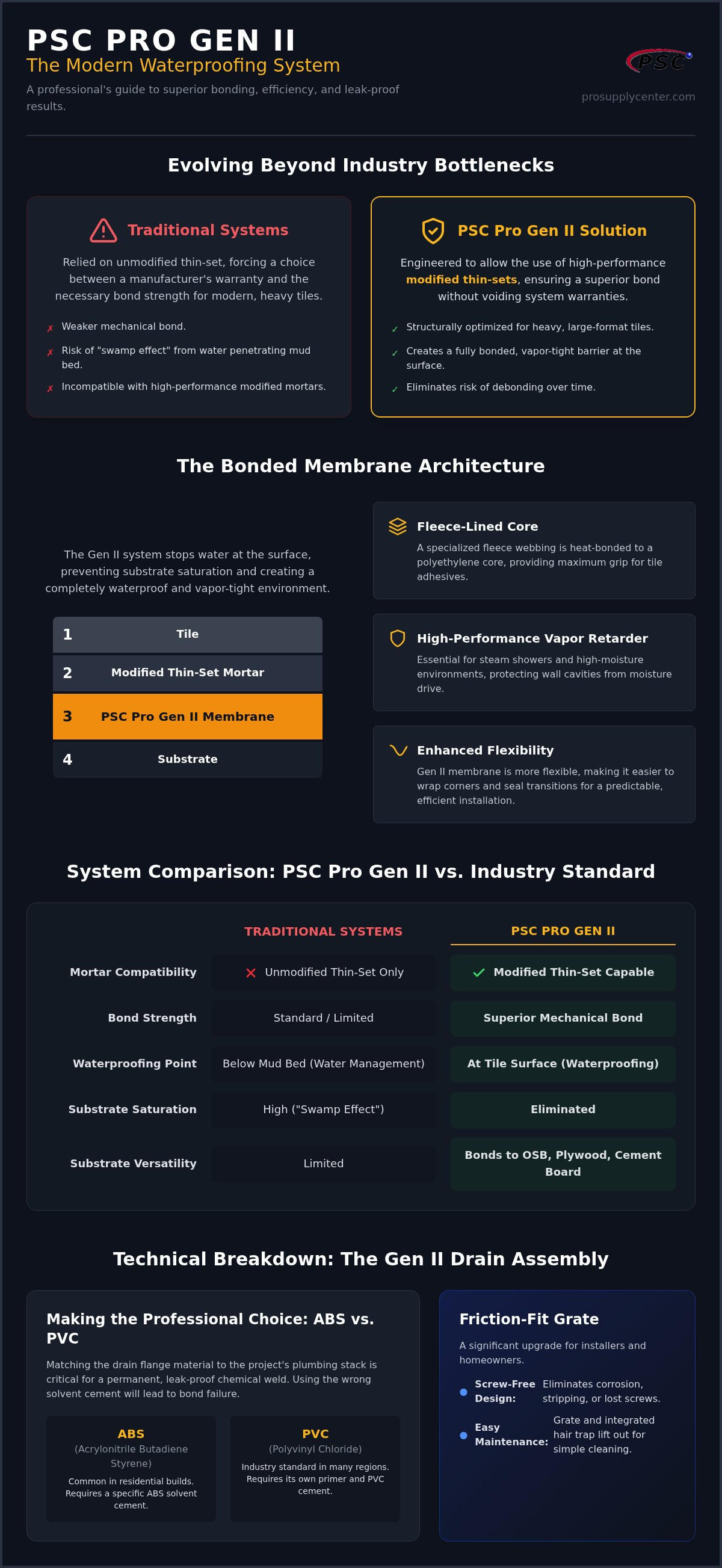
The PSC Pro Gen II Waterproofing System represents a fundamental shift in how professionals approach wet area protection. Traditional shower builds relied on heavy mortar beds and buried PVC pan liners, which essentially managed water after it had already penetrated the substrate. The Gen II system utilizes a bonded membrane philosophy. This method stops water at the surface, preventing the saturation of the mud bed and eliminating the "swamp effect" common in older installations. Effective Waterproofing is no longer about managing leaks; it's about preventing moisture from ever entering the assembly.
A primary technical advantage of this architecture is its compatibility with high-performance modified thin-set mortars. Many legacy systems restrict installers to unmodified mortars, which can limit bonding strength on modern substrates. The Gen II system is engineered to handle the polymers in modified adhesives, creating a superior mechanical bond. This is critical when you're installing the heavy, large-format tiles that dominate modern bathroom design. It ensures the tile stays exactly where you put it without the risk of debonding over time.
The Role of the Bonded Membrane
The core of the system is the fleece-lined membrane. This specialized fleece webbing is heat-bonded to a polyethylene core, providing a high-surface-area texture that tile adhesive can grip with maximum tenacity. Because the membrane acts as a high-performance vapor retarder, it's an essential component for steam showers where moisture drive is a constant threat to wall cavities. The membrane maintains a consistent, minimal thickness that prevents substrate height variations and simplifies lippage control during tile placement.
Gen II Engineering Improvements
The Gen II evolution focuses on job-site efficiency and material compatibility. The membrane is noticeably more flexible than first-generation versions, making it easier to wrap around corners and seal transitions without the material "fighting" the installer. This flexibility doesn't come at the expense of durability; it simply makes the installation process more predictable.
- Substrate Versatility: The system bonds reliably to OSB, plywood, and various cement boards, providing flexibility in both new construction and remodeling scenarios.
- Reduced Seam Build-up: The edges are engineered to minimize thickness at overlaps, which ensures the tiling surface remains flat and doesn't require excessive mortar to level out.
- Integrated Components: From the membrane to the drain assembly, every part is designed to work as a single, continuous unit, eliminating the compatibility issues that arise when mixing brands.
Technical Breakdown of the Gen II Drain Assembly
The drain assembly is the most critical junction in any shower build. If the transition between the floor and the drain isn't perfectly flush, you'll struggle with lippage and pooling water. The PSC Pro Gen II Waterproofing System uses a specialized flange design that ensures a low-profile transition. This engineering choice allows the membrane to sit flatter against the substrate, providing a seamless path for water to reach the outlet without the "hump" often found in traditional drain systems.
ABS vs. PVC: Making the Professional Choice
It's essential to match the flange material to your project's plumbing stack to ensure a proper chemical weld. ABS (Acrylonitrile Butadiene Styrene) is common in many residential builds and requires a specific solvent cement. PVC (Polyvinyl Chloride) is the standard elsewhere and needs its own primer and cement. Using the wrong adhesive can lead to a failed bond and eventual leaks beneath the tile. Beyond chemical compatibility, these materials have different thermal expansion rates. Selecting the right one ensures the drain housing remains stable even as water temperatures fluctuate. Following the International Building Code guidelines for wet area construction will help you determine the appropriate material for your specific jurisdiction and plumbing requirements.
Grate Customization and Maintenance
The friction-fit grate is a significant upgrade for both the installer and the homeowner. Traditional grates rely on small screws that easily strip, corrode, or get lost over time. The Gen II system uses a secure friction fit that stays in place during use but allows for easy removal during cleaning. This access is vital because the assembly includes an integrated hair trap. This trap catches hair and debris at the surface, preventing clogs deep within the plumbing that are difficult and expensive to clear later.
Aesthetics shouldn't come at the cost of performance. Grates are available in various professional finishes, including Brushed Nickel and Oil Rubbed Bronze, to match modern bathroom fixtures. These components are also designed to handle high flow rates. They easily manage the output of multi-head shower systems without backing up or flooding the pan. If you're looking for a specific finish or material, you can browse the available shower drains to find the perfect match for your tile selection and technical needs.
Comparing PSC Pro Gen II to Industry Standard Systems
Choosing a waterproofing solution often feels like navigating a maze of manufacturer warranties and conflicting mortar requirements. While many legacy systems demand the use of unmodified thin-set, the PSC Pro Gen II Waterproofing System is engineered to work with high-performance modified mortars. This technical distinction isn't just about preference; it's about the physics of bonding modern materials. For professionals working with dense, large-format porcelain or natural stone, the shear strength of a polymer-modified mortar is necessary to prevent tile movement and ensure long-term stability.
The Modified Thin-set Factor
Competitor systems often mandate unmodified mortar because their membranes are so vapor-impermeable that the moisture in modified thin-sets cannot escape, leading to extremely slow cure times. This often results in a "moisture sandwich" where the adhesive remains soft and unstable for days. The PSC Pro Gen II membrane is designed to allow modified thin-sets to hydrate and cure properly without trapping excess moisture, providing a faster return to service. By facilitating a balanced rate of evaporation and hydration, the Gen II membrane prevents the moisture sandwich effect that leaves tiles unstable in competitor systems. Using modified thin-set gives you superior chemical bonding properties that are essential when installing heavy tiles on vertical surfaces or high-traffic floors.
Kit Versatility and Sizing
Efficiency on the job site is often determined by how much material you have to cut or throw away. The PSC Pro Gen II Waterproofing System is available in a wide range of kit sizes, from standard 32 inch by 60 inch configurations to larger 48 inch by 72 inch setups. This variety ensures you can select a kit that closely matches your project dimensions, significantly reducing membrane waste and the labor time spent on custom trimming. Each kit is a comprehensive solution, containing all necessary components for a professional build.
- Complete Sealing: Every kit includes enough waterproof band, pre-formed corners, and pipe seals to handle standard plumbing penetrations.
- Universal Application: The system is compatible with both pre-sloped pans and traditional mud bed installations, allowing you to maintain your preferred workflow.
- Professional Grade: For those looking for a complete package, PSC Waterproofing Shower Kits provide the peace of mind that every component was designed to work together.
When you analyze the cost-to-value ratio, the Gen II system stands out by including specialized accessories that competitors often sell as add-ons. By providing a flatter, more consistent substrate that accommodates large format tiles, this system reduces the need for excessive back-buttering or leveling compounds later in the project. It's a pragmatic choice for contractors who value both the integrity of the build and the profitability of the installation.
Professional Installation Best Practices for Success
A successful installation starts long before the membrane touches the floor. Substrate preparation is the foundation of the entire assembly. The PSC Pro Gen II Waterproofing System requires a substrate that is structurally sound, level, and free of any debris that could puncture the material or interfere with the bond. Professionals should always wipe down the substrate with a damp sponge to remove dust. This simple step prevents the mortar from skinning over too quickly, ensuring the adhesive stays wet enough to grab the membrane fleece effectively.
The "Trowel and Embed" method is the industry standard for securing the membrane. After spreading the mortar with the notched side of the trowel, use the flat side to press the membrane into the bed. This action collapses the ridges and forces air pockets out to the edges. Without this step, trapped air creates voids that weaken the mechanical bond and can lead to hollow sounds under the finished tile. Periodically peel back a corner of the membrane during the process to verify 100% mortar transfer to the fleece backing.
Managing Corners and Transitions
Corners and curbs are the most common failure points in shower construction. While site-made corners are possible, they often result in excessive material build-up that makes tiling difficult. Pre-formed PSC corners are engineered to provide a guaranteed seal without the bulk. When installing these components, maintain a 2-inch minimum overlap at all seams and transitions. This overlap is a non-negotiable requirement for a vapor-tight seal. When wrapping the "Pro Curb," ensure the membrane extends down the face and onto the floor to create a continuous, unbroken barrier that prevents water from wicking into the subfloor.
Trowel Selection and Mortar Consistency
Using the correct notch size is vital for achieving the proper bed thickness. A 1/8 inch by 1/8 inch or 1/4 inch by 3/16 inch V-notch trowel is typically recommended for membrane installation. The mortar should be mixed to a "peanut butter" consistency. It must be loose enough to spread easily but firm enough to hold a ridge. This consistency provides the maximum open time, allowing you to position and adjust the membrane before the adhesive begins to set. If the mortar becomes too stiff, scrape it off and apply a fresh batch rather than trying to re-temper it with water.
Once the installation is complete, the 24-hour flood test is the final step in professional certification. Plug the drain and fill the basin with water to just below the top of the curb. Mark the water level and wait. This test confirms the integrity of every seam and pipe penetration before the tile is set. To ensure you have all the professional-grade components needed for a fail-safe build, you can purchase the complete PSC Pro Gen II Waterproofing System for your next project.
Completing the Build: Integrated Accessories and Finishing
The final integrity of a shower build often depends on how seamlessly secondary accessories integrate with the primary membrane. Traditional custom-framed wall boxes are prone to leaking because they create too many manual seams that are difficult to seal perfectly. Using pre-manufactured Shower Niches eliminates this risk by providing a single, waterproof unit that fits between standard stud spacing. Similarly, installing a recessed Ceramic Soap Dish requires careful attention to the seal. These components should be set using the same high-performance modified thin-set used for the membrane. This ensures the accessory becomes a structural part of the wall rather than a surface-level addition that could fail under stress.
Waterproofing Niches and Benches
Integrating these elements into the PSC Pro Gen II Waterproofing System involves a specific technical sequence. First, apply a layer of thin-set to the niche flange. Use a flash-patching technique to smooth the transition between the flange and the wall membrane. Bridging this gap with PSC Seam Tape ensures a continuous vapor barrier that prevents moisture from reaching the framing. For shower benches, the technical priority is the pitch. Every bench surface must have a slight slope toward the drain to prevent standing water. Even in a waterproofed environment, standing water eventually degrades grout and can lead to mold growth. It's a detail that separates a professional installation from a standard one.
The Pro Supply Center Advantage
Achieving a professional finish also requires the right tools for the tile installation phase. Pairing the Gen II system with a Ceramic Tiles Leveling System is the most effective way to prevent lippage. This is especially critical when working with the large format tiles mentioned in earlier sections. These leveling clips and wedges maintain a perfectly flat surface across every joint, compensating for slight substrate variations that the membrane might follow. Finishing the build involves selecting grates for the Shower Drains that complement the high-end tile choices. These grates provide the final aesthetic touch while maintaining the high flow rates required for modern shower heads.
Pro Supply Center serves as a comprehensive resource for these professional-grade supplies. By providing one-stop sourcing for membranes, drains, and specialized accessories, we help contractors maintain consistency across their projects. Our national shipping logistics ensure that full PSC Waterproofing Shower Kits and finishing tools arrive at the job site on time. This reliability reduces downtime and keeps your projects on schedule. Visit Pro Supply Center to browse the full PSC Pro Gen II inventory and find the specific components required for your next professional-grade build.
Building Fail-Safe Showers with Confidence
Transitioning from traditional methods to the PSC Pro Gen II Waterproofing System provides a technical edge on every job site. By utilizing vapor-tight membrane technology and allowing for the use of contractor-preferred modified thin-sets, you ensure a mechanical bond that stands up to modern tile demands. These features, combined with the integrated drain assembly and customizable grates, create a complete moisture management ecosystem that protects the building's structure while simplifying your workflow.
The system's architecture eliminates common compatibility issues found in legacy setups. From versatile drain flanges to pre-manufactured niches and benches, these components reduce labor time without compromising the integrity of the build. When you follow professional best practices like substrate preparation and flood testing, you deliver a maintenance-free shower environment that lasts for decades. It's the most pragmatic way to ensure every installation meets a professional standard of excellence.
While structural integrity is paramount, many commercial contractors also require integrated technology solutions; Pinnacle Digital Solutions Ltd. provides expert design and installation for audio-visual and physical security systems in professional environments.
Beyond the job site, maintaining these high standards often involves protecting the specialized tools and equipment you rely on; to see how professionals in other industries safeguard their hardware, learn more about ProX and their rugged flight cases for audio and lighting gear.
Ready to upgrade your next project with reliable, professional-grade supplies? Shop the Complete PSC Pro Gen II Waterproofing Range and take advantage of our national shipping on all shower kits. Your commitment to quality results starts with selecting the right materials for the job.
Frequently Asked Questions
Can I use modified thin-set mortar with the PSC Pro Gen II system?
Yes, the PSC Pro Gen II Waterproofing System is specifically engineered for use with polymer-modified thin-set mortars. While legacy systems often require unmodified mortar to prevent a moisture sandwich, the Gen II membrane allows modified adhesives to hydrate and cure correctly. This provides a stronger mechanical bond that is essential for modern, heavy, large-format tiles and natural stone installations.
What is the difference between the Gen I and Gen II drain systems?
The primary difference lies in the grate design and maintenance features. The Gen II system introduces a friction-fit grate that eliminates the need for screws, which often corrode or strip over time. It also includes an integrated hair trap that catches debris at the surface. These improvements simplify routine cleaning and prevent clogs deep within the plumbing lines that are difficult to clear.
Do I need to perform a flood test after installing the PSC Pro membrane?
Yes, performing a 24-hour flood test is a critical step for any professional shower installation. You should plug the drain and fill the basin with water to just below the curb level. This test verifies the integrity of all membrane seams, corners, and pipe penetrations before you begin setting tile. It's the only way to guarantee a leak-proof build and verify your work.
Is the PSC Pro Gen II system suitable for steam shower applications?
Yes, the PSC Pro Gen II Waterproofing System is an excellent choice for steam shower applications. The membrane acts as a high-performance vapor retarder, which is necessary to manage the intense moisture drive found in steam environments. It prevents vapor from penetrating the wall cavity and damaging the home's framing, ensuring a long-lasting and mold-free installation that stands up to heat.
Can I install the PSC Pro Gen II membrane over regular drywall?
No, you shouldn't install the membrane over regular gypsum drywall in a professional shower environment. Professional best practices dictate using cement backer board or moisture-resistant tile underlayments. These materials provide a more stable substrate that won't lose structural integrity if moisture ever reaches it. This ensures the system maintains its bond and supports the weight of the tile over time.
What size kit do I need for a standard 32x60 shower stall?
For a standard 32 inch by 60 inch shower, you should select the corresponding 32x60 PSC Waterproofing Shower Kit. These kits are pre-sized to minimize material waste and include the correct amount of membrane, waterproof band, and pre-formed corners. If your shower has custom dimensions, it's safer to size up to the next available kit to ensure you have enough material for full coverage.
How do I choose between an ABS and a PVC drain flange?
You must choose the flange material that matches your home's existing plumbing stack. If your waste pipes are black, they are likely ABS; if they are white, they are typically PVC. Using the matching material allows you to create a proper chemical weld using the correct solvent cement. Mixing materials or using the wrong cement can lead to joint failure and leaks beneath the floor.
Does the PSC Pro Gen II system come with a warranty for professional installers?
Warranty coverage is typically available when the system is installed according to the manufacturer's specific technical protocols. To maintain eligibility, professionals must follow all documented steps, including proper substrate preparation and the mandatory 24-hour flood test. Using the complete system of membranes, drains, and corners ensures all components are compatible, which is a standard requirement for professional-grade product warranties in the industry.


