

The most expensive wall trim you'll ever buy is the one you have to replace twice because it couldn't withstand a standard floor scrubber. Selecting a commercial grade cove base isn't just about matching paint colors; it's a technical decision that determines how well your facility handles daily impact and moisture. You've likely dealt with the frustration of adhesive failure in high-traffic zones or the constant struggle of cleaning gaps where the base meets the floor. When carts and cleaning equipment constantly strike your walls, the material chemistry of your trim is the only thing standing between a clean facility and costly repairs.
We understand that maintaining a hygienic, professional environment requires materials that perform under pressure without constant upkeep. This guide provides the technical insights needed to master the differences between vinyl and rubber options, focusing on scuff-resistance and lowering long-term maintenance costs. We'll examine the 2026 performance standards, including the critical ASTM F1861-21 requirements, to ensure a seamless transition that protects your walls. By the end of this guide, you'll know exactly how to specify a selection that survives the toughest commercial environments.
Key Takeaways
- Distinguish between the durability of rubber and the cost-efficiency of vinyl to ensure your wall protection matches the facility traffic demands.
- Select the correct commercial grade cove base profile to create a hygienic seal and shield walls from heavy impact by carts and cleaning equipment.
- Evaluate the logistical benefits of 120-foot rolls versus 4-foot strips to improve job site productivity and reduce long-term maintenance costs.
- Integrate specialized wall trim with high-performance waterproofing systems like PSC Pro Gen II for comprehensive moisture protection in professional environments.
What is Commercial Grade Cove Base and Why Does it Matter?
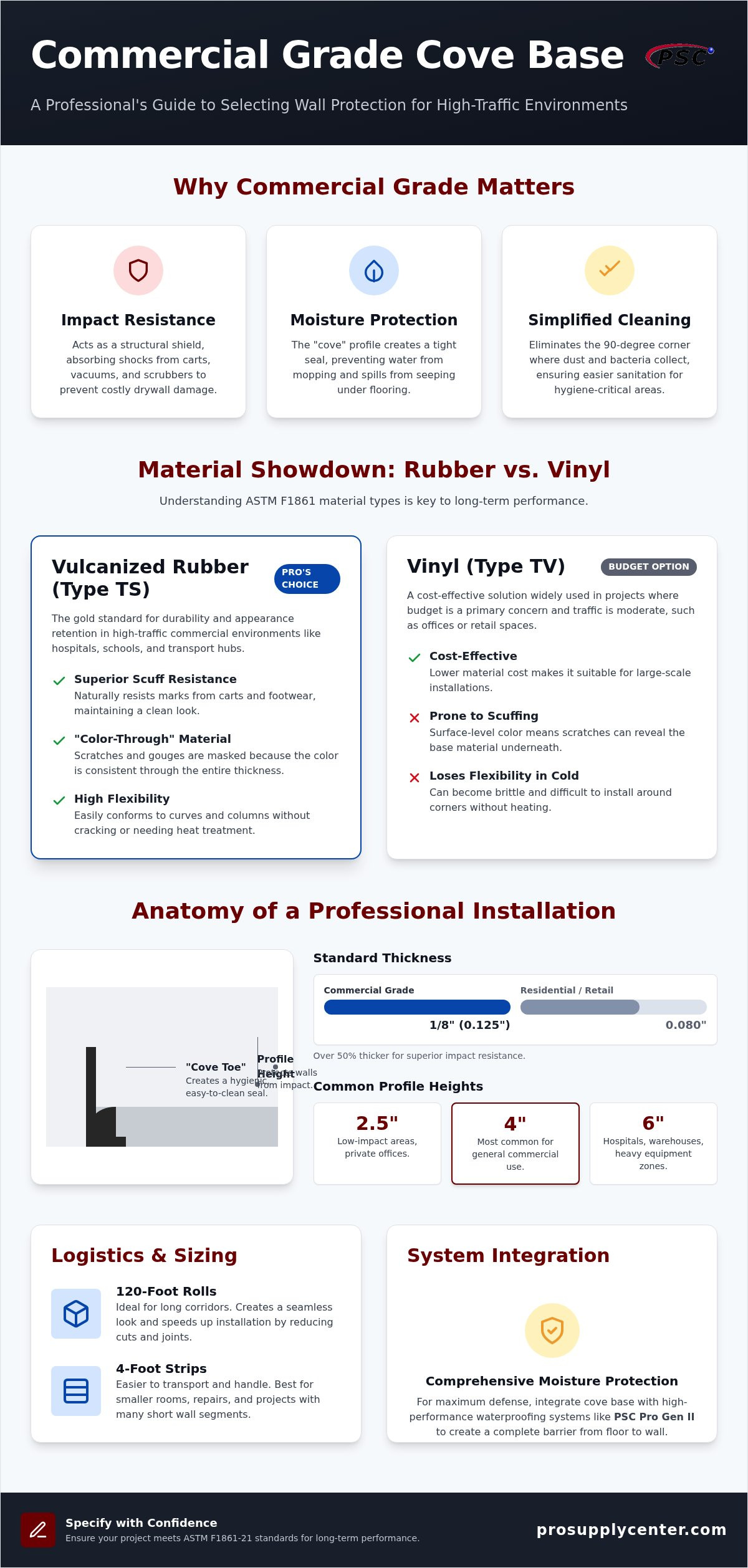
Commercial grade cove base is a high-density polymer or rubber trim designed for scuff resistance and hygienic sealing. While a standard Baseboard in a residential home serves a largely aesthetic purpose, the commercial equivalent functions as a structural shield. In high-traffic environments, the wall-to-floor transition is a point of constant vulnerability. Without professional-grade molding, drywall absorbs moisture from mopping and sustains impact damage from heavy equipment. Unlike thin residential trim, commercial wall base is engineered for density and height to provide a durable barrier against the rigors of facility operations.
The Role of Cove Base in Facility Maintenance
The primary reason for installing a "cove" or "toed" profile is to manage moisture and debris. The curved bottom edge, known as the toe, creates a tight seal against hard flooring surfaces like VCT or tile. This prevents mop water and spilled liquids from seeping under the floor covering, which often leads to adhesive failure and mold growth. In high-traffic corridors and lobbies, these moldings significantly reduce wall repair costs by absorbing shocks from luggage carts, wheelchairs, and floor scrubbers.
For commercial kitchens and healthcare settings, this transition is essential for meeting hygiene standards. It eliminates the 90-degree corner where dust and bacteria typically accumulate, making the floor-to-wall junction much easier to sanitize. By selecting a material that resists chemical cleaners, facility managers ensure the trim doesn't degrade or discolor over time.
Key Components of Professional Wall Base
Professional-grade materials are distinguished by their specific dimensions and physical properties. While retail products often measure 0.080 inches in thickness, the industry standard for commercial grade cove base is 1/8 inch (0.125"). This extra thickness provides the impact resistance necessary to prevent gouging and visible wear. Standard height options include:
- 2.5-inch: Often used for aesthetic subtlety in low-impact areas like private offices.
- 4-inch: The most common choice for general commercial use, providing ample protection against foot traffic and vacuum cleaners.
- 6-inch: Specified for hospitals, gyms, and warehouses where heavy equipment is frequently moved; to complement these durable finishes, you can discover Gym Pros for high-quality fitness equipment.
The material must also maintain high flexibility. This allows installers to wrap the base around columns and architectural curves without the material cracking or pulling away from the wall. Proper flexibility ensures that the adhesive bond remains intact even as the building settles or experiences temperature shifts. Choosing the right thickness and height is the first step in creating a maintenance-friendly facility.
Material Science: Rubber vs. Vinyl vs. TPR Wall Base
Selecting the right material for a commercial grade cove base project requires understanding chemical compositions defined by the ASTM F1861 standard. Professionals generally choose between three types: Vinyl (TV), Thermoplastic Rubber (TP), and Vulcanized Rubber (TS). Each material serves a specific functional purpose based on the facility's traffic patterns and maintenance budget. Using a high-quality commercial grade cove base ensures the installation withstands the impact of floor scrubbers and heavy carts over years of service.
Vinyl Wall Base: Performance and Limitations
Vinyl, classified as Type TV, is the most budget-conscious option for large-scale projects. It's widely used in retail and corporate offices where the primary goal is a clean, uniform finish at a lower material cost. Because it's a thermoplastic, it's easy to clean and available in an extensive range of colors. However, vinyl has physical limitations. It's more prone to scuffing from shoes and equipment. In cooler temperatures, it loses flexibility, making it harder to install around tight corners without heating the material. It's best suited for back-of-house areas or storage rooms where high-impact durability isn't the priority.
Rubber Cove Base: Why Pros Choose It
For high-traffic environments like hospitals or schools, vulcanized rubber (Type TS) is the gold standard. Unlike vinyl, rubber is "color-through," meaning the pigment exists throughout the entire thickness of the material. If a heavy cart gouges the surface, the scratch remains the same color as the trim, masking the damage. It offers superior scuff resistance and maintains its flexibility across a wide temperature range. This flexibility allows for a more secure bond on irregular wall surfaces. For a deeper dive into these technical specifications, see our Rubber Cove Base Trim: 2026 Professional Comparison Guide.
Thermoplastic Rubber (TPR) as a Middle Ground
Thermoplastic rubber, or Type TP, acts as a hybrid. It provides the visual appeal and some of the flexibility of vulcanized rubber but at a price point closer to vinyl. TPR is highly resistant to UV fading and temperature fluctuations, making it a reliable choice for modern commercial interiors with large windows. While it doesn't offer the same extreme chemical resistance as vulcanized rubber, it's a significant upgrade over standard vinyl for most public-facing spaces. When planning your next project, you can browse our professional-grade trims to find the material that fits your specific performance requirements.
Selecting Profiles: Cove vs. Straight Base for Commercial Environments
Profile selection is a technical requirement dictated by the floor covering's physical properties and the facility's maintenance protocol. While material chemistry determines how the trim handles impact, the profile determines how it manages moisture and hygiene at the floor-to-wall junction. Choosing the wrong profile for a commercial grade cove base installation often leads to visible gaps or difficult-to-clean corners that trap bacteria. Professionals must evaluate whether a coved toe or a straight edge provides the most functional transition for the specific flooring material in use.
When to Use a Coved Toe
The "cove" profile features a flared bottom edge, known as a toe, designed specifically for hard surface flooring like VCT, LVT, or ceramic tile. This toe serves a critical structural purpose by hiding the expansion gaps required for floating or resilient floors. It creates a tight, liquid-resistant seal that prevents mop water and cleaning chemicals from seeping into the wall cavity. This is why coved profiles are the mandatory standard for high-hygiene environments like hospitals and commercial kitchens. This Resilient Wall Base guide provides further technical context on how these profiles meet ASTM standards for sanitation. In most facilities, a 4-inch height is the industry standard for coved profiles because it offers sufficient protection against floor buffer strikes while maintaining a clean visual line.
Straight Base for Carpeted Commercial Spaces
Straight base, or toeless profile, is used almost exclusively in carpeted areas where a flared toe is unnecessary and aesthetically disruptive. In executive offices, conference rooms, and hotel corridors, a straight commercial grade cove base provides a modern, flush look that complements the carpet pile. Because carpet doesn't require the same liquid-tight seal as tile or vinyl, the toeless design allows the baseboard to sit directly on top of the flooring without creating a bulky footprint.
Installation for straight profiles is generally faster because there's no flared edge to manipulate around corners. However, it offers less protection against moisture during deep carpet cleanings. When planning a facility-wide rollout, professionals often use coved profiles in restrooms and lobbies while switching to straight profiles in carpeted workspaces to balance functionality with design. Matching the profile to the floor's thickness is essential; a baseboard that is too thin will fail to cover the transition properly, leading to a visible line of adhesive or an unfinished wall edge.
Professional Planning: Sizing, Formats, and Adhesive Requirements
Planning the logistics of a commercial grade cove base installation is just as critical as selecting the material chemistry. Site conditions and format choices directly impact labor costs and the finished appearance of the project. Before the first piece is glued, installers must account for site temperature and humidity. Acclimatizing the material to the installation environment for at least 24 hours is a non-negotiable step; it prevents the trim from expanding or contracting after the adhesive has set, which often leads to unsightly gaps or buckling.
Rolls vs. Strips: Efficiency and Waste Management
Contractors typically choose between 120-foot rolls and 4-foot strips based on the layout of the facility. For long corridors and large open areas, rolls are the preferred format because they minimize seams. Fewer seams mean fewer points of potential failure and a much cleaner visual line. Conversely, 4-foot strips are more practical for small offices or rooms with complex layouts where frequent cutting is required. Handling shorter sections in tight spaces reduces the risk of adhesive transfer to the floor or wall surfaces. To master these logistical decisions, consult The Professional Guide to 4 Inch Cove Base Rolls: Selection, Planning, and Installation.
Adhesive Selection and Application
Adhesive failure is the most common cause of "peeling" in commercial environments. Standard wall base adhesives work well in climate-controlled spaces, but high-moisture areas like restrooms or ground-floor lobbies require specialized formulations. These high-performance glues resist the alkalinity and moisture that often migrate through concrete slabs. Using the correct nozzle on the adhesive gun is equally important to ensure 100% coverage across the back of the trim. For a detailed breakdown of application techniques, read our Professional Cove Base Adhesive Installation: The 2026 Contractor Guide.
Corner Handling: In-Corner vs. Out-Corner Techniques
Wrapping corners correctly is what separates a professional installation from a DIY effort. The "v-groove" method involves scoring the back of the material so it folds cleanly around the corner without the need for a seam. Proper corner scoring is essential to prevent the base from "popping" off the wall over time. For high-durability rubber installations, many pros prefer pre-molded corners. These factory-made pieces provide a consistent, reinforced edge that withstands direct strikes from heavy carts better than hand-folded corners. If you're ready to start your next project, you can order professional-grade cove base and adhesives directly from our inventory.
Ensuring Performance: Integrating Cove Base into Professional Flooring Systems
A commercial grade cove base is most effective when treated as a structural component of a larger flooring assembly rather than a standalone trim piece. In environments prone to moisture, such as commercial restrooms or locker rooms, the wall base serves as the final seal for the entire flooring system. When properly integrated, it prevents water from migrating behind the wall substrate, where it could cause long-term structural damage or mold growth. Professionals must ensure that the chosen material chemistry is compatible with the underlying waterproofing membranes and the specific cleaning agents used in the facility.
Cove Base in Wet Area Assemblies
In high-moisture zones, the wall base acts as a secondary barrier against liquid penetration. This is especially critical when the project includes integrated shower and wet room designs. For instance, when installing the PSC Pro Gen II Waterproofing System, the cove base provides the transition that protects the lower edge of the wall board. The bond between the vinyl or rubber and the waterproofing membrane must be verified for chemical compatibility to prevent adhesive failure caused by hydrostatic pressure or vapor transmission. In commercial locker rooms, using a coved profile ensures that floor-to-ceiling moisture management remains intact, even during heavy-duty washdowns.
A unified finish requires coordinating the wall base with other essential tiling accessories. This includes matching the aesthetic and functional performance of shower drains, niches, and soap dishes. When these components are sourced as part of a single system, the risk of material mismatch or installation conflict is significantly reduced. This systematic approach ensures the facility remains hygienic and easy to maintain throughout its service life.
The Pro Supply Center Advantage
Sourcing all finishing components—from abrasives and leveling systems to commercial grade cove base—from a single professional supplier simplifies project logistics. Pro Supply Center curates materials specifically for contractor-level performance, ensuring that every roll of trim and every tube of adhesive meets industry standards for 2026 projects. By providing a centralized source for technical materials, we help contractors move from the planning phase to procurement with confidence in the durability of their builds.
Final Inspection Checklist
Before completing a commercial installation, perform a final walkthrough using this technical checklist:
- Adhesive Coverage: Verify there is no "hollow" sound when tapping the base, indicating full adhesive transfer.
- Toe Alignment: Ensure the flared toe is perfectly flush with the floor surface to prevent liquid accumulation.
- Seam Integrity: Check that all seams in long runs are tight and that corner scores show no signs of "popping" or tension.
- Cleanliness: Remove any adhesive squeeze-out from the top edge or floor surface using the manufacturer-recommended solvent.
Moving into 2026, the focus for facility managers remains on lowering long-term maintenance costs through superior material selection. By following these integration protocols, you ensure that your wall protection performs as a reliable shield for years to come.
Professional Standards for Long-Term Wall Protection
Selecting a high-performance commercial grade cove base is a technical investment in your building's longevity. By matching material chemistry to traffic patterns and ensuring your profiles create a hygienic seal, you move beyond aesthetic trim to functional protection. Whether you're integrating with waterproofing systems or optimizing long corridors with 120-foot rolls, these technical details determine the success of the install. Proper planning and professional adhesive selection prevent the peeling and scuffing that compromise high-traffic environments.
Pro Supply Center supports your 2026 projects with an expert-vetted selection of materials engineered for the job site. We offer contractor-grade durability and provide reliable national shipping on all flooring accessories. Our inventory is curated to handle the rigors of commercial wear without the need for constant maintenance. Browse our Professional Collection of Vinyl and Rubber Cove Base today to secure the finishing components your project requires. Build with confidence knowing your materials are built to last.
Professional Guidance for Commercial Wall Base
What is the difference between rubber and vinyl cove base?
Rubber (Type TS) is a vulcanized material with color extending through the entire profile, making scratches nearly invisible. Vinyl (Type TV) is a thermoplastic that's generally more budget-friendly but prone to scuffing. Rubber remains flexible in cold temperatures and offers superior resistance to chemicals and heavy impact. Professionals choose rubber for high-traffic corridors, while vinyl is often sufficient for low-impact retail or office storage areas.
Which height of cove base is best for commercial buildings?
The 4-inch height is the standard for most commercial grade cove base applications. It provides enough vertical coverage to protect walls from floor scrubbers and vacuum strikes while maintaining a balanced aesthetic. You might specify 6-inch base for high-impact zones like hospital hallways or warehouses where heavy carts are common. Conversely, a 2.5-inch profile is typically reserved for private offices where wall damage risks are minimal and a subtle look is preferred.
Can I install commercial cove base over existing baseboard?
You shouldn't install new wall base over existing trim. A professional installation requires a direct bond between the adhesive and a clean, dry wall surface. Leaving old baseboard in place prevents the new material from sitting flush, which leads to adhesive failure and visible gaps. Removing the old trim and scraping away leftover glue is essential to ensure the new commercial grade cove base creates a permanent, hygienic seal against the wall.
How many linear feet are in a standard cove base roll?
A standard roll of 4-inch commercial wall base typically contains 120 linear feet of material. This long format is the preferred choice for contractors working on large facilities because it significantly reduces the number of seams in long hallways. For smaller rooms or complex layouts with many corners, you might use 4-foot strips instead. However, the 120-foot roll offers the best balance of job-site efficiency and a clean, continuous appearance for major projects.
Do I need a special adhesive for commercial rubber wall base?
Yes, rubber wall base generally requires a high-performance acrylic adhesive to ensure a long-lasting bond. Vulcanized rubber is more dimensionally stable than vinyl but needs a stronger initial grab to prevent the ends from curling or popping off the wall. In areas with high moisture or extreme temperature shifts, you may need a specialized moisture-resistant formulation. Always check the manufacturer's technical data sheet to match the adhesive type to the specific wall substrate.
How do you clean and maintain commercial grade vinyl wall base?
Maintain vinyl trim by wiping it down with a neutral pH cleaner and a soft cloth. You can use a non-abrasive scrub brush for stubborn scuffs, but avoid harsh solvents or bleach, which can dull the finish or cause the material to become brittle. For those looking for high-quality maintenance products, visit Cleaners Hub for a wide range of professional solutions. Regular maintenance prevents the buildup of floor wax and dirt at the wall junction. Keeping the surface clean ensures the material retains its flexibility and continues to provide a professional appearance.
The toe is the flared bottom edge that extends outward to cover the gap between the wall and the floor. It's necessary for hard surface flooring like tile, VCT, or LVT because it hides expansion joints and prevents moisture from seeping under the floor covering. If you're installing trim in a carpeted area, you don't need a toe. In those cases, a straight or toeless profile provides a cleaner, more modern transition.
Can commercial cove base be used in wet areas like commercial kitchens?
Yes, rubber and high-density vinyl are excellent for wet environments when installed with a coved toe. These materials create a water-resistant barrier that protects the wall from frequent mopping and spills. For maximum performance in commercial kitchens or locker rooms, integrate the base with a professional membrane like the PSC Pro Gen II Waterproofing System. This combination ensures that moisture cannot bypass the floor-to-wall junction, maintaining the structural integrity of the facility.


