

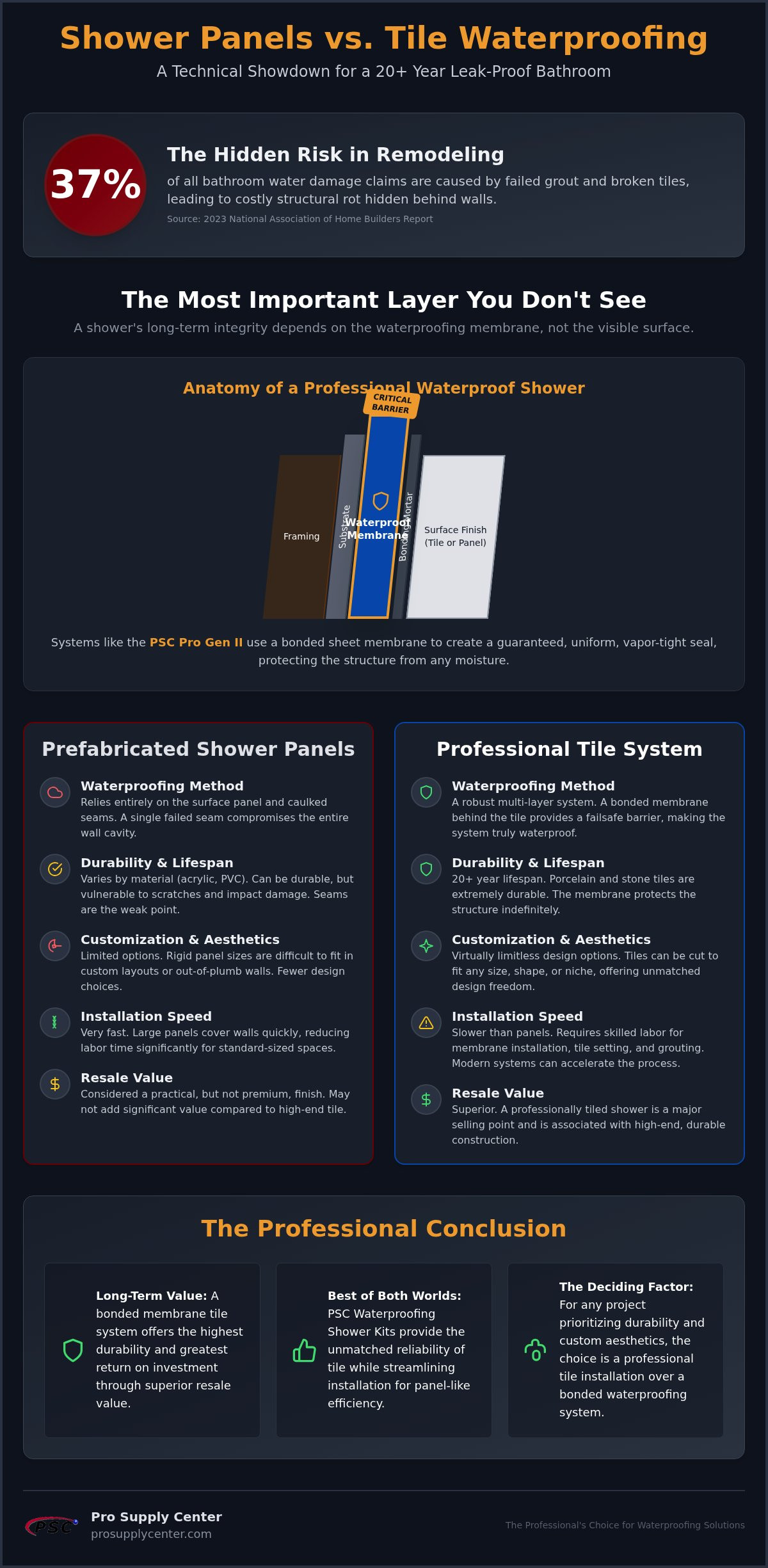
The most expensive mistake in a bathroom remodel isn't picking the wrong color; it's assuming the surface material provides the waterproofing. When comparing shower panels vs tile waterproofing, the reality is that the integrity of your build depends entirely on what's happening behind the wall. According to a 2023 report from the National Association of Home Builders, broken tiles and failed grout account for approximately 37% of all bathroom water damage claims. It's no wonder that many professionals and homeowners now question if traditional methods are worth the risk of structural rot.
We understand the pressure to choose a system that balances aesthetic appeal with long-term durability. You need a solution that remains leak-proof for over 20 years without the high labor costs or the constant threat of mold growth. This article provides a technical comparison of prefabricated panels against waterproofed tile systems to help you decide. You'll gain a clear understanding of the total cost of ownership and why the underlying substrate, like the PSC Pro Gen II Waterproofing System, is the most critical factor in any installation. By the end, you'll have the confidence to select a high-performance solution that protects your investment for decades.
Key Takeaways
- Learn why the waterproofing substrate, such as the PSC Pro Gen II Waterproofing System, determines the 20-year lifespan of your shower regardless of the surface finish.
- Compare the 15-year maintenance requirements and total cost of ownership for shower panels vs tile waterproofing to make an informed budget decision.
- Discover how PSC Waterproofing Shower Kits allow contractors to achieve panel-like installation efficiency without sacrificing the premium look of custom tile.
- Identify the technical criteria for choosing between the rapid installation speed of panels and the high-end durability and resale value of a bonded tile system.
Shower Panels vs. Tile Waterproofing: The Modern Debate
The evolution of bathroom design has moved beyond simple aesthetics to a rigorous focus on moisture management and installation efficiency. The decision between shower panels vs tile waterproofing often centers on a trade-off between the immediate convenience of prefabricated materials and the long-term reliability of a custom-built system. While traditional tile has been the standard for centuries, the rise of advanced panels has introduced a new mechanical approach to wet-area wall coverings. This modern debate isn't just about how a shower looks; it's about the technical mechanics of how a system handles water over a twenty-year lifespan.
The core conflict lies in balancing installation speed with structural integrity. A panel system prioritizes the surface barrier, whereas a professional tile installation relies on a multi-layered assembly. Understanding these technical differences is essential for choosing the most durable solution for your specific project environment.
The Rise of Prefabricated Shower Wall Panels
Prefabricated panels are typically constructed from acrylic, PVC, or composite stone. These systems are designed to function as a large-format, seamless barrier that sheds water directly into the drain. Their primary appeal is found in commercial applications and rental properties where maintenance must be kept to a minimum. Because there are no grout lines, the risk of surface-level mold growth is significantly reduced.
However, these systems aren't without drawbacks. Panel sizing is often rigid. If your framing isn't perfectly plumb or if you're dealing with a custom architectural layout, panels can be difficult to scribe and fit without compromising the factory edges. This lack of layout flexibility often makes them a poor fit for high-end custom renovations where every inch of space must be optimized. For insights on maximizing layout with modern fixtures, Bath & Shower Supermarket provides a comprehensive guide on how floating elements can enhance spatial perception in tight bathrooms.
Why Tile Still Dominates the Professional Market
Tile remains the gold standard for high-end residential builds because of its material versatility and superior resale value. From porcelain to natural stone, the design options are virtually limitless. More importantly, modern installation techniques have addressed the traditional vulnerabilities of tile. The "grout leak" myth is often debunked by the use of high-performance sub-tile waterproofing membranes.
By utilizing the PSC Pro Gen II Waterproofing System, contractors can create a fail-safe environment that doesn't rely on the tile or grout to be the primary water barrier. This bonded membrane approach ensures that even if moisture bypasses the surface, the structural framing remains dry. Professionals also use ceramic tile leveling systems to ensure a perfectly flat finish, effectively closing the gap between the speed of panels and the precision of tile. This combination of durability and customization is why tile continues to outperform prefabricated alternatives in the professional sector.
Engineering the Substrate: The Role of Waterproofing Membranes
A bonded waterproofing membrane serves as the primary defense against moisture infiltration in a professional shower assembly. While many surface materials are marketed as waterproof, the reality is that water management happens behind the finish. In high-moisture environments, "surface-only" systems rely entirely on caulked seams or grout to keep the structure dry. If a single joint fails, water penetrates the wall cavity. This leads to structural rot that remains hidden until the damage is extensive and costly to repair.
When comparing shower panels vs tile waterproofing, the method of application matters. Liquid liners are common but can suffer from inconsistent thickness depending on the installer's technique. In contrast, modern waterproofing membranes in sheet form provide a factory-guaranteed thickness across the entire surface. The PSC Pro Gen II Waterproofing System utilizes this bonded sheet technology to create a vapor-tight seal that liquid alternatives often struggle to match. This system ensures that moisture is stopped at the surface of the membrane, protecting the substrate from saturation.
Why Traditional Pan Liners Often Fail
Older "waterproof" systems used thick PVC liners buried under a heavy mortar bed. These setups rely on weep holes in the drain to evacuate moisture that eventually reaches the liner. Over time, these holes often clog with mineral deposits or mortar fines. This creates a "swamp effect" where the mortar bed stays permanently saturated. Capillary action then wicks this moisture up into the wall studs, causing mold growth even if the tile looks perfect. Transitioning to thin-set bonded membranes eliminates this reservoir of standing water entirely.
PSC Pro Gen II: The Contractor Advantage
The Gen II system is engineered for high-performance builds where failure isn't an option. It functions as a high-performance bonded membrane that ensures a leak-proof environment before the first tile is ever set. It's compatible with various substrates and standard thin-set mortars, making it a versatile choice for complex layouts. For those weighing the benefits of shower panels vs tile waterproofing, the Gen II system provides a level of structural security that a simple panel adhesive cannot replicate. You can find these professional-grade components in our complete waterproofing kits to ensure your next project is built to last.
Performance Comparison: Durability, Maintenance, and Longevity
The long-term value of a bathroom remodel depends on the surface's ability to withstand daily thermal cycling and physical impact. When analyzing shower panels vs tile waterproofing, porcelain tile is the clear leader in longevity. A fired porcelain surface is nearly impervious to scratches and can maintain its aesthetic integrity for over 50 years. Acrylic and PVC panels, while functional, typically have a service life of 10 to 15 years before UV exposure or surface abrasions begin to dull the finish. This difference in material density also affects structural rigidity; a tiled wall, bonded with thin-set to a high-performance membrane, adds significant mass and stiffness to the wall assembly.
Repairability is another critical factor for professional builds. If a heavy object cracks a single tile, a technician can remove and replace that specific unit without disturbing the surrounding area. If a large-format composite panel is punctured or deeply scratched, the entire sheet usually requires replacement. This modular nature of tile makes it a more sustainable choice for high-traffic environments where accidental damage is a statistical reality.
Maintenance Realities: Grout Lines vs. Panel Joints
The marketing claim that shower panels are "maintenance-free" is a common industry myth. While panels eliminate grout, they still require silicone sealant at every corner and transition joint. Silicone is a sacrificial material that typically fails every three to five years, requiring labor-intensive removal and re-application to prevent leaks. In contrast, using large format tile significantly reduces the number of grout lines. When combined with professional shower installation components and modern epoxy grouts, tile systems become nearly as easy to clean as panels while offering superior mold resistance at the joints.
Impact and Scratch Resistance
Porcelain tile density far exceeds that of acrylic or even some solid-surface composites. This hardness is essential in multi-generational homes where medical equipment or heavy shower chairs might strike the walls. When deciding between shower panels vs tile waterproofing for a high-use residential project, the physical hardness of the material is a primary engineering concern. To ensure these systems meet the necessary performance attributes of waterproofing membranes and surface coverings, professionals look for materials that resist chemical etching and UV degradation. Tile remains the preferred choice because it doesn't "oil-can" or flex, providing a rock-solid feel that panels simply cannot match.
Installation Efficiency: Labor Costs and Timelines
The primary argument for choosing panels is often the reduction in project duration. When evaluating shower panels vs tile waterproofing, the "click-together" nature of acrylic or composite systems can theoretically cut installation time by 40% to 60%. However, this speed often depends on the existing site conditions. Panels are rigid and unforgiving. If your framing is out of plumb or your corners aren't perfectly square, you'll spend hours shimming walls and using specialized adhesives to achieve a flush fit. These hidden labor steps often negate the perceived time savings for many renovation projects.
Modern advancements in tile technology have significantly narrowed this gap. By using waterproofing shower kits, contractors can bypass the most time-consuming parts of traditional tiling. These kits replace the multi-day process of pouring a mortar bed and waiting for it to cure with a pre-engineered system that is ready for tile in hours rather than days.
Streamlining Tile with PSC Waterproofing Shower Kits
PSC Waterproofing Shower Kits provide a systematic approach to shower construction. Each kit includes pre-sloped shower pans that eliminate the need for a manual mud bed, integrated drains that connect seamlessly to the waterproofing membrane, and pre-fabricated curbs and niches to reduce on-site framing and waterproofing time. These components allow a professional to achieve a "panel-like" timeline. You get the speed of a prefabricated system with the structural integrity and design flexibility of porcelain or stone; for high-end projects, sourcing premium materials from infinitystoneinc.ca ensures a professional and durable finish.
While panels are marketed as DIY-friendly, the level of precision required for a leak-proof installation is high. Any error in cutting or sealing a large-format panel is permanent and expensive. Professional tile work, while requiring more steps, offers more room for adjustment during the setting process. Using a ceramic tile leveling system allows even complex large-format tiles to be installed quickly and without lippage. This tool ensures a perfectly flat surface, which is critical for long-term performance.
When deciding between shower panels vs tile waterproofing, the upfront speed of panels must be weighed against the 20-year durability of a properly waterproofed tile system. For a fail-safe installation that balances speed and quality, explore our PSC Waterproofing Shower Kits to streamline your next build.
The Logical Conclusion: Which System Wins for Your Project?
The final decision in the shower panels vs tile waterproofing debate depends on your project’s specific constraints. It isn't a matter of one system being universally superior; it's about matching the material performance to the environment. Panels provide a functional barrier with minimal downtime, making them ideal for high-turnover commercial spaces. However, for residential projects where the goal is a permanent, high-value installation, a waterproofed tile system remains the professional standard. The integrity of the build doesn't come from the surface material alone but from the professional-grade substrate supporting it.
Best Use Cases for Shower Wall Panels
Panels are most effective in scenarios where installation speed is the primary metric for success. This includes hospitality projects, quick-turn rental property updates, or simple alcove showers with standard dimensions. They are also a pragmatic solution in regions where skilled tile labor is scarce. Because panels don't require the same curing times as traditional mortar beds, they allow for a functional bathroom in a fraction of the time. If the architectural layout is straightforward and the project timeline is aggressive, panels offer a reliable, if less modular, alternative to tile.
Why Custom Tile with PSC Pro Gen II is the Ultimate Solution
Custom tile is the preferred choice for high-end residential builds and multi-generational homes. By using the PSC Pro Gen II Waterproofing System, you eliminate the risk of moisture infiltration while maintaining total design freedom. This approach allows for the seamless integration of custom niches, benches, and even specialized moisture control components like Air Vent Box Dampers. The long-term ROI is significantly higher for tile installations. They don't just provide a premium aesthetic; they add to the structural rigidity of the wall assembly. When you invest in professional-grade membranes and leveling systems, you're building a shower that will remain leak-proof for the life of the home.
Before making your final choice, use this checklist to ensure a fail-safe installation regardless of the surface material:
- Verify that the waterproofing membrane is a bonded sheet system like PSC Pro Gen II.
- Ensure the drain assembly is specifically designed to integrate with the membrane to prevent wicking.
- Confirm that all corners and transitions are reinforced with waterproof banding.
- Check that the surface material meets the required slip-resistance standards for wet areas.
- Match the installation method to the expected traffic and maintenance schedule of the space.
Securing Your Build for the Decades Ahead
Choosing between shower panels vs tile waterproofing isn't just an aesthetic decision; it's an engineering choice that affects the structural health of your home. We've established that while panels offer immediate speed, a properly waterproofed tile system provides superior impact resistance and modular repairability. The most critical takeaway is that the surface finish is only as reliable as the membrane behind it. By focusing on a high-performance substrate, you ensure that moisture management remains fail-safe regardless of whether you choose the convenience of panels or the permanence of porcelain.
You don't have to sacrifice quality for efficiency. With our contractor-grade PSC Pro Gen II membrane and complete all-in-one shower kits, you can achieve professional results on a streamlined timeline. We offer national shipping on professional tiling supplies to support your project from start to finish. Build a Leak-Proof Shower with the PSC Pro Gen II System and move forward with the confidence that your installation is built to last. Your next successful renovation starts with the right foundation.
Frequently Asked Questions
Do shower wall panels require a waterproof membrane behind them?
While many manufacturers claim panels are self-waterproofing, professional standards often dictate a secondary barrier at critical junctions. Panels rely on silicone at seams, which is a sacrificial material that fails over time. Installing a bonded membrane like the PSC Pro Gen II Waterproofing System behind panels provides a fail-safe layer. This prevents structural rot if a joint seal degrades, ensuring the wall cavity remains dry throughout the entire life of the system.
Can I install tile directly over old shower panels?
Direct installation of tile over existing acrylic or PVC panels isn't recommended. Tile requires a rigid, porous substrate to achieve a mechanical bond with thin-set mortar. Panels are non-porous and can flex, which leads to grout cracking and tile delamination. For a successful project, you should remove the old panels and install a dedicated substrate, such as a cement backer board combined with a high-performance bonded membrane to ensure structural stability.
Is tile waterproofing more expensive than installing wall panels?
The initial labor cost for tile is typically higher due to the multi-step installation process. However, when evaluating shower panels vs tile waterproofing over a 20-year period, tile often proves more cost-effective. Panels usually require full replacement every 10 to 15 years, while a properly waterproofed tile system can last 50 years. Tile also offers higher resale value and better modular repairability, reducing the total cost of ownership for the homeowner.
How long does a PSC Pro Gen II waterproofing system last?
The PSC Pro Gen II Waterproofing System is engineered to last for the entire lifespan of the shower installation, often exceeding 25 years. Because it's a high-performance bonded membrane, it doesn't degrade like liquid liners or traditional PVC pan liners. When installed according to manufacturer specifications, it provides a permanent vapor-tight seal. This protects the structural framing from moisture and mold growth, ensuring the integrity of the build for the life of the home.
Are grout-less tile options comparable to shower panels?
Large-format tiles with minimal grout lines offer a similar aesthetic to panels but with significantly higher durability. These systems use thin-set and a bonded membrane for structural integrity, unlike panels that rely on adhesives. While they reduce maintenance compared to mosaic tile, they still require professional-grade substrates. Using a Ceramic Tiles Leveling System ensures these large tiles remain perfectly flat, providing a seamless look that outperforms the physical attributes of standard prefabricated panel systems.
What happens if water gets behind a shower wall panel?
If moisture bypasses a panel joint, it often becomes trapped between the non-porous panel and the wallboard. This creates a perfect environment for mold growth and structural rot that remains hidden from view. Unlike tile, which may show grout discoloration as a warning sign, panel failure is often invisible until the damage is extensive. This risk is why industry professionals recommend a secondary waterproofing layer behind any panel system to protect the underlying structure.
Can I use a PSC Waterproofing Shower Kit with any tile type?
Yes, PSC Waterproofing Shower Kits are compatible with virtually all tile types, including ceramic, porcelain, and natural stone. The kit provides a universal substrate that ensures a leak-proof environment regardless of the finish material. Because the system includes integrated drains and niches, it simplifies the installation of complex layouts. This versatility allows you to achieve a custom look while maintaining the highest level of moisture protection available for both residential and commercial projects.
Which system is better for preventing mold and mildew growth?
A tile system utilizing a bonded membrane like PSC Pro Gen II is superior for long-term mold prevention. Traditional systems and some panels can trap water in mortar beds or behind seams, creating hidden moisture reservoirs. A bonded system stops water directly at the surface, ensuring no moisture reaches the organic materials in your walls. When combined with modern epoxy grouts, this setup effectively eliminates the damp conditions that allow mold to thrive.


