

A high-end renovation can be completely undermined by a single whistling register or a persistent cold spot in a master suite. Most contractors focus on furnace capacity, but the real failure point in modern HVAC efficiency often lies in the final few inches of the distribution system. If you've ever struggled to balance airflow in a multi-story home or felt the aesthetic clash between industrial hardware and premium flooring, you're dealing with a fundamental hardware gap that standard registers simply can't bridge.
We understand that professional-grade results require more than just basic covers. By mastering the technical nuances of Air Vent Box Dampers, you can eliminate noisy turbulence and achieve the precise zonal temperature control required by current 2026 building standards. This article outlines how to optimize airflow efficiency and reduce system-wide energy consumption while ensuring a flush, professional finish for floor and wall vents. We will examine the mechanical advantages of these components and the specific steps needed to integrate them seamlessly into high-performance flooring and tile projects.
Key Takeaways
- Learn to regulate branch-level CFM to eliminate uneven room temperatures and disruptive system noise.
- Evaluate the performance differences between galvanized steel and aluminum Air Vent Box Dampers for long-term reliability.
- Implement precise zonal climate control and reduce energy waste through professional airflow balancing techniques.
- Understand the critical sizing nuances between duct and rough openings to ensure a perfect flush-mount finish.
- Discover how to integrate specialized dampers with custom floor materials for a modern, high-end interior aesthetic.
Understanding Air Vent Box Dampers in Modern HVAC Systems
A professional HVAC installation is only as effective as its ability to deliver air precisely where it's needed. Air Vent Box Dampers serve as the mechanical interface between the main duct branch and the living space. Unlike a standard register that sits on the surface, these dampers are internal airflow control mechanisms designed to regulate Cubic Feet per Minute (CFM) at the point of delivery. To better understand the mechanical principles involved, you can research What is an HVAC Damper? and how it functions as a valve within a larger system. In the context of residential builds, these components allow for granular balancing that surface-level hardware cannot provide.
The technical demands on HVAC systems have increased significantly in 2026. With the implementation of the Energy Star Furnace Version 5.0 specification and stricter regional efficiency mandates, simply "moving air" is no longer enough. Systems must maintain specific static pressure limits to operate within their design parameters. Precision airflow balancing ensures that the blower motor doesn't work against excessive resistance, which directly impacts the longevity of the entire unit. Using professional-grade components helps avoid the common call-backs associated with noisy or inefficient systems.
The Role of Dampers in Airflow Management
Properly balanced airflow prevents the common issue of "starving" certain rooms while over-pressurizing others. By adjusting the damper at the branch level, a technician can direct air to specific zones without overloading the plenum. This level of control is vital for multi-story homes where heat naturally rises and lower floors often remain cold. While an inline damper is positioned deep in the ductwork, a box damper is a compact, self-contained unit that fits directly into the vent opening for accessible terminal-point regulation.
Box Dampers vs. Standard Register Louvers
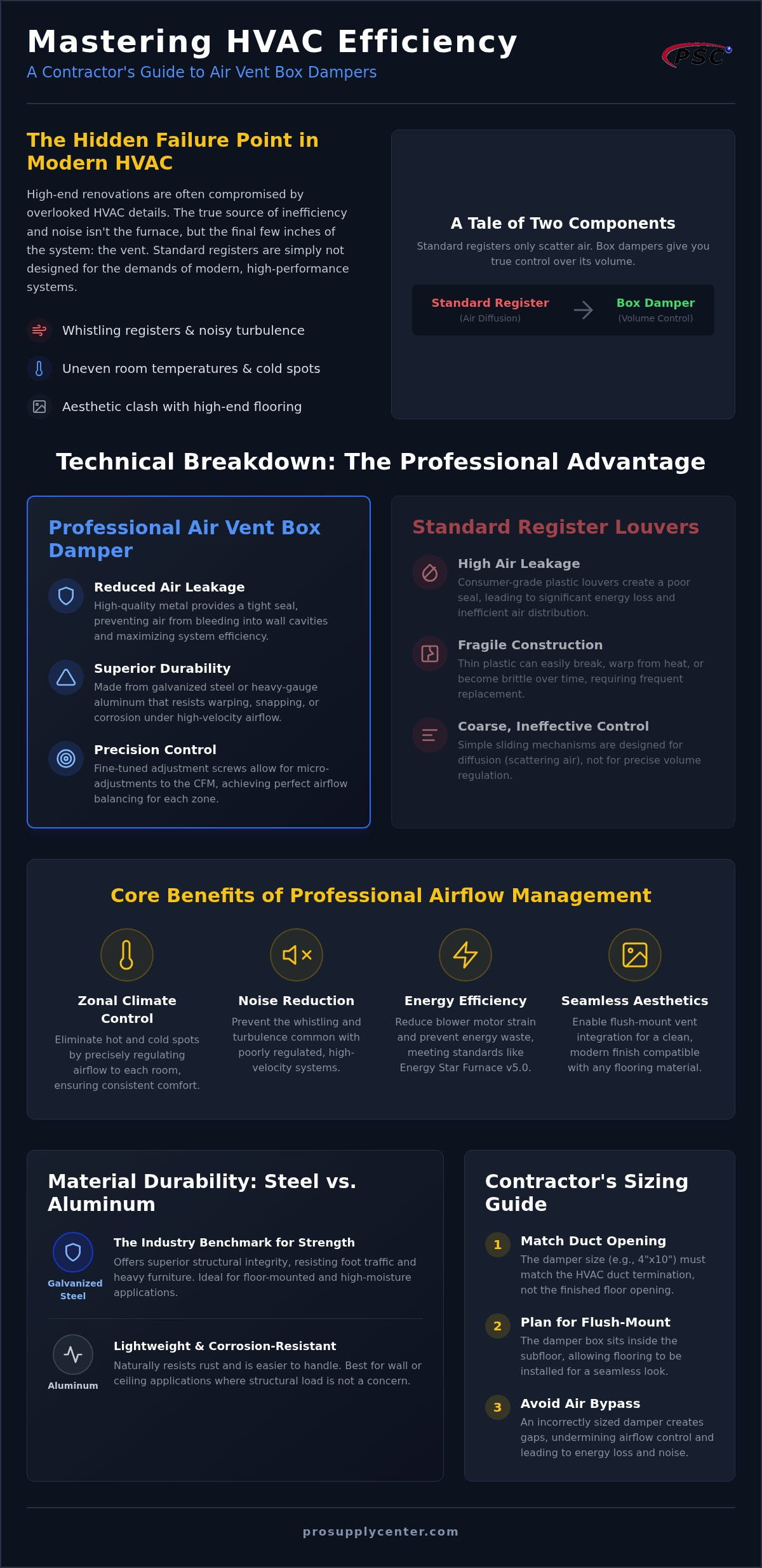
It's a common mistake to assume that the plastic sliders on a decorative register provide sufficient control. Registers are designed primarily for air diffusion, which means they scatter air to prevent drafts; they aren't built for volume control. In contrast, Air Vent Box Dampers are engineered for mechanical volume regulation. They offer several advantages over standard consumer hardware:
- Reduced Leakage: High-quality metal dampers provide a tighter seal than consumer-grade plastic louvers, preventing air from bleeding into wall cavities.
- Durability: Professional box dampers utilize galvanized steel or aluminum, ensuring they won't warp or snap under high-velocity airflow.
- Precision: Fine-tuned adjustment screws allow for micro-adjustments to the CFM, which is impossible with the coarse sliding mechanisms found on cheap registers.
Choosing a functional damper over a simple decorative cover ensures that the ventilation system performs as the engineer intended. This protects the build's integrity and the homeowner's comfort over the long term.
Technical Specifications and Material Durability
The performance of Air Vent Box Dampers depends heavily on the materials used to withstand constant pressurized airflow. In residential and light commercial projects, the choice usually comes down to galvanized steel or aluminum. While aluminum offers excellent weight reduction and natural corrosion resistance, galvanized steel remains the industry benchmark for structural integrity. It's particularly effective in floor-mounted applications where the unit must resist the weight of foot traffic and the corrosive potential of household cleaning agents.
Standardized sizing ensures compatibility across most modern ductwork configurations. The most common dimensions found in professional builds are 4x10 and 4x12 inches, though specialized projects may require custom sizing. Precision in these dimensions is critical; a damper that is even slightly off-spec can create gaps that lead to air bypass, undermining the entire ventilation strategy. When selecting hardware, it's vital to prioritize professional-grade construction supplies that adhere to these strict tolerances.
Construction Materials for Long-Term Reliability
Reliability starts with the gauge of the metal. Thinner materials tend to vibrate or "flutter" under high static pressure, creating unwanted noise. Heavy-duty galvanized steel, often treated with zinc plating or a powder coating, provides a barrier against rust in moisture-heavy environments like bathrooms or kitchens. This protective layer is essential for preventing the oxidation that can seize moving parts over time. A thick-gauge frame ensures the box maintains its shape during the rough-in phase of a renovation, preventing the warping that often occurs with consumer-grade plastic alternatives.
Mechanical Components and Adjustment Mechanisms
The internal architecture of the damper determines how effectively it manages air volume. Opposed blade mechanisms are generally preferred over parallel blades because they provide more uniform distribution and less turbulence. High-quality hinges and recessed adjustment screws are necessary for a flush-mount installation, allowing the register to sit perfectly level with the finished floor or wall surface. As the Future of HVAC technology moves toward more efficient, automated systems, the manual reliability of these mechanical components remains the foundation of a quiet home.
Air whistling is a common complaint in systems with high-velocity airflow. This is usually caused by air escaping through tiny gaps in the damper's frame or blades. Professional dampers solve this by incorporating high-temperature gaskets or specialized seals that dampen vibration and close off air bypass. These seals must be durable enough to resist degradation from dust and debris exposure over years of operation. Ensuring smooth mechanical movement after a decade of service requires precision-engineered pivot points that don't rely on volatile lubricants, which can attract dirt and eventually cause the mechanism to fail.
The Benefits of Precision Airflow Control
Precision airflow control is often marketed as a digital luxury, but mechanical solutions like Air Vent Box Dampers offer a robust and reliable alternative. By regulating airflow at the terminal point, you can achieve zonal comfort without the complexity of automated dampers or smart thermostats in every room. This manual approach provides a level of dependability that electronic systems often lack, especially in high-moisture or high-traffic environments. It allows the user to fine-tune the environment based on seasonal needs rather than relying on sensors that may fail over time.
A common misconception in HVAC maintenance is that closing any vent will inevitably lead to heat exchanger failure or a frozen evaporator coil. While total blockage of a large percentage of registers is problematic, professional balancing is actually a requirement for system longevity. The goal is to manage static pressure within the manufacturer's specified range, typically around 0.5 inches of water gauge for residential units. Properly adjusted dampers keep the system within its optimal operating window, preventing the mechanical stress that leads to premature blower motor failure.
Improving Energy Efficiency and Zonal Comfort
By redirecting conditioned air from low-usage areas like guest rooms to high-traffic living spaces, you optimize the work performed by the blower motor. This balancing act reduces the 'duty cycle' of the unit, meaning the compressor and furnace run for shorter durations to reach the desired temperature. In large multi-story homes, the ROI of professional dampers is realized through significantly lower utility bills and the elimination of auxiliary space heaters in rooms that previously suffered from poor circulation. It's a pragmatic way to force the system to work for the occupants' current needs.
Reducing HVAC System Noise and Backpressure
Air noise is usually the result of turbulence. When air hits the sharp edges of a standard surface-mounted register louver, it creates the high-pitched whistling often heard in master bedrooms. Air Vent Box Dampers provide a smoother transition for high-velocity air by moving the control mechanism deeper into the cavity. This design manages the backpressure more effectively, preventing the "oil-canning" effect where ductwork metal pops or vibrates due to sudden pressure shifts.
Managing static pressure is the technical foundation of a quiet home. If a system is poorly balanced, the blower motor must work harder to overcome resistance, which increases electrical consumption and mechanical wear. Box dampers allow for micro-adjustments that keep the system within its optimal operating window. This prevents the vibration and mechanical stress that eventually leads to costly repairs or premature system replacement. Achieving a silent, efficient home requires this level of mechanical precision at every branch point.
Installation and Sizing Strategies for Contractors
Successful installation starts with precision measurement. Contractors often confuse the rough opening in the subfloor with the internal duct dimension, which leads to ordering errors and project delays. For a standard residential build, the internal duct opening is the primary reference point. If the duct is 4x10 inches, the damper must match this nominal size exactly. Measuring the outer flange instead of the box body is a common mistake that results in a poor fit or significant air bypass. You don't want to discover a sizing mismatch after the subfloor is already prepped.
Most US residential builds utilize standardized duct dimensions like 4x10 or 4x12. However, the thickness of the finish material—whether it's 3/4-inch hardwood, large-format tile, or luxury vinyl—must be accounted for during the rough-in. If the damper sits too low, the final register won't sit flush with the floor. Conversely, if it sits too high, it creates a structural interference that prevents the flooring from laying flat. Always verify the mechanical clearance of the blades before the flooring is installed. They must move through their full range of motion without hitting the underside of the decorative register.
Determining the Correct Box Damper Size
The "nominal size" of Air Vent Box Dampers refers to the duct opening they are designed to fit, not the total exterior footprint of the metal frame. When selecting hardware, follow these technical guidelines to ensure a seamless fit:
- Internal Clearance: Ensure the box body is slightly undersized compared to the duct boot to allow for a drop-in installation without forcing the metal.
- Flange Support: The flange should be wide enough to rest securely on the subfloor but thin enough to be covered by the finish flooring or the register lip.
- Depth Requirements: Verify that the damper box doesn't extend too deep into the boot, which can restrict airflow at the elbow or transition point.
Integration with Subflooring and Wall Framing
A rigid connection to the joist or stud is essential to prevent the unit from shifting under the pressure of high-velocity air. Use galvanized screws to secure the frame directly to the structural members. For a professional finish, manage the transition between the HVAC boot and the damper box carefully. Any gaps here allow conditioned air to escape into the floor assembly, wasting energy and potentially causing moisture issues. Professional installers seal these junctions with high-quality, UL-rated foil tape to ensure that 100% of the airflow reaches the living space.
Before laying the final flooring, perform a mechanical test. Open and close the blades to ensure the adjustment screw is accessible and functioning correctly. This is the last opportunity to fix any alignment issues without tearing up expensive tile or wood. To find the right hardware for your next project, explore the selection of professional-grade HVAC components available online. Ensuring that the static pressure remains within acceptable limits after the dampers are installed will protect the blower motor and extend the life of the system.
Seamless Design: Aesthetic Solutions for High-End Projects
Modern architectural trends prioritize clean lines and minimalist surfaces. Traditional white or brown metal registers often disrupt the visual flow of a premium stone floor or custom hardwood installation. Air Vent Box Dampers allow contractors to move the control mechanism beneath the floor level. This mechanical shift enables the use of custom vent covers made from the same material as the floor, achieving a cohesive aesthetic that big-box retail grilles cannot match. Professionals use these components to hide the industrial elements of an HVAC system without sacrificing the ability to balance the home's climate.
In moisture-prone environments, aesthetic integration must be balanced with structural integrity. Integrating these dampers within the PSC Pro Gen II Waterproofing System provides a reliable solution for bathroom ventilation. It ensures that the ventilation path is properly sealed against moisture intrusion while maintaining the ability to balance airflow precisely. This is a critical step in preventing the mold and humidity issues common in poorly ventilated, high-end bathrooms. A professional build requires every component to work in harmony with the waterproofing layer to protect the subfloor.
Concealed Dampers and Tile-able Options
Achieving a zero-clearance finish on modern floor tiles requires specialized hardware. Utilizing a Tile-able Air Vent Box Damper allows the installer to inset a piece of the actual flooring material into the register frame. This creates a nearly invisible vent that blends perfectly with the surrounding tile grid. Even when hidden, the damper remains mechanically accessible through the vent opening. This accessibility is a mechanical necessity. It allows for seasonal airflow adjustments and debris removal without needing to remove permanent flooring elements or damaging the grout lines.
Why Professional-Grade Supplies Matter for Finish Quality
Luxury renovations leave no room for the 'cheap plastic' look of consumer-grade hardware. Professional metal box dampers provide the rigidity needed for flush-mount success in high-traffic areas. Unlike plastic alternatives that warp under the weight of tile or stone, galvanized steel maintains its shape under pressure. This prevents the alignment issues that lead to uneven grout lines or clicking sounds when the vent is stepped on. Using durable metal hardware ensures that the airflow mechanism functions smoothly behind decorative finishes for decades.
Choosing professional supplies is about protecting the integrity of the build and avoiding the high cost of call-backs. When a damper is buried beneath a custom stone or wood finish, the cost of failure is extreme. High-quality adjustment screws and reinforced hinges ensure that the Air Vent Box Dampers don't seize or rattle over time. By prioritizing utility and functional reliability during the rough-in phase, you ensure that the final aesthetic result remains as functional as it is beautiful.
Optimizing Ventilation for Long-Term Performance
Achieving a high-performance HVAC finish requires a focus on the mechanical details that standard registers often ignore. By integrating Air Vent Box Dampers into your project, you move beyond simple air diffusion to true volume control. This shift ensures that your system operates within its designed static pressure limits while providing the silent, zonal comfort modern homeowners demand. Whether you're coordinating with a waterproofing system in a bathroom or installing custom tile-in vents, the foundation of a successful build is the quality of the underlying hardware.
Pro Supply Center is committed to providing the materials that withstand job site pressure. We offer contractor-grade durability and expert technical support for complex HVAC integrations. With national shipping available on all professional supplies, you can get the components you need for any project. Browse Professional Air Vent Box Dampers at Pro Supply Center to find reliable solutions for your next renovation. Precision airflow is well within your reach when you use the right professional tools.
Frequently Asked Questions
Is it safe to completely close an air vent box damper?
It's generally not recommended to shut any vent entirely. Closing more than 10% of the vents in your home can increase static pressure beyond the standard 0.5 inches of water gauge. This puts excessive strain on the blower motor and can lead to a frozen evaporator coil or a cracked heat exchanger. It's safer to partially close the blades to balance the airflow across different rooms.
What is the difference between a register, a grille, and a damper?
A grille is a simple cover without moving parts. A register is a grille that includes attached louvers for air diffusion. A damper is the mechanical valve located inside the duct or vent box that regulates the actual volume of air. While registers scatter air to prevent drafts, Air Vent Box Dampers control the amount of air reaching the room for precise zonal balancing.
How do I know what size box damper I need for my floor vent?
You must match the damper to the nominal size of the duct opening rather than the exterior flange of your vent cover. If your duct boot measures 4x10 inches, you need a 4x10 damper. Measuring the rough-in opening before you install finish flooring ensures the unit drops in without interference. Always verify the internal clearance to avoid forcing the metal frame into a tight boot.
Can air vent box dampers help reduce HVAC noise?
Yes, they significantly reduce whistling and air turbulence. By moving the airflow control mechanism deeper into the vent cavity, box dampers prevent high-velocity air from hitting the sharp edges of surface-mounted register louvers. This creates a smoother transition for the air and reduces the vibration often associated with poor airflow balancing in residential ductwork. It's an effective way to maintain a quiet home environment.
Do box dampers work with both heating and cooling systems?
These components are designed for all forced-air systems regardless of the temperature. Since they're typically made of galvanized steel or aluminum, they handle the thermal expansion of heating cycles and the moisture of cooling cycles without warping. This makes them a versatile choice for year-round climate control. They're essential for balancing the temperature differences between floors in multi-story homes during seasonal shifts.
What is the best material for a damper in a high-moisture area like a bathroom?
Heavy-duty galvanized steel with a zinc coating or powder finish is the best choice. These materials resist the oxidation that occurs when steam from showers enters the ventilation system. In professional installations, using moisture-resistant hardware alongside the PSC Pro Gen II Waterproofing System ensures that the entire floor and vent assembly remains structurally sound. This prevents the mechanical parts from seizing in the humid environment.
How do I adjust a damper that is installed under a tile-in vent?
You access the adjustment screw directly through the gaps in the decorative vent cover. Most professional-grade Air Vent Box Dampers feature recessed screws or levers designed for tool-based adjustment. This allows you to fine-tune the airflow without removing the tile-in tray or disturbing the grout lines. This ensures the invisible aesthetic remains intact while maintaining functional control over the room's temperature and pressure levels.
Will installing new dampers improve my home's energy efficiency?
Yes, by allowing for better system balancing and reducing waste. When you redirect air from unused spaces to high-traffic areas, the HVAC unit reaches the thermostat setpoint faster. This reduces the total duty cycle of the compressor and furnace. Properly balanced systems operate with less mechanical resistance, which lowers electrical consumption and prevents the energy loss caused by over-pressurizing certain branches of the ductwork.


