
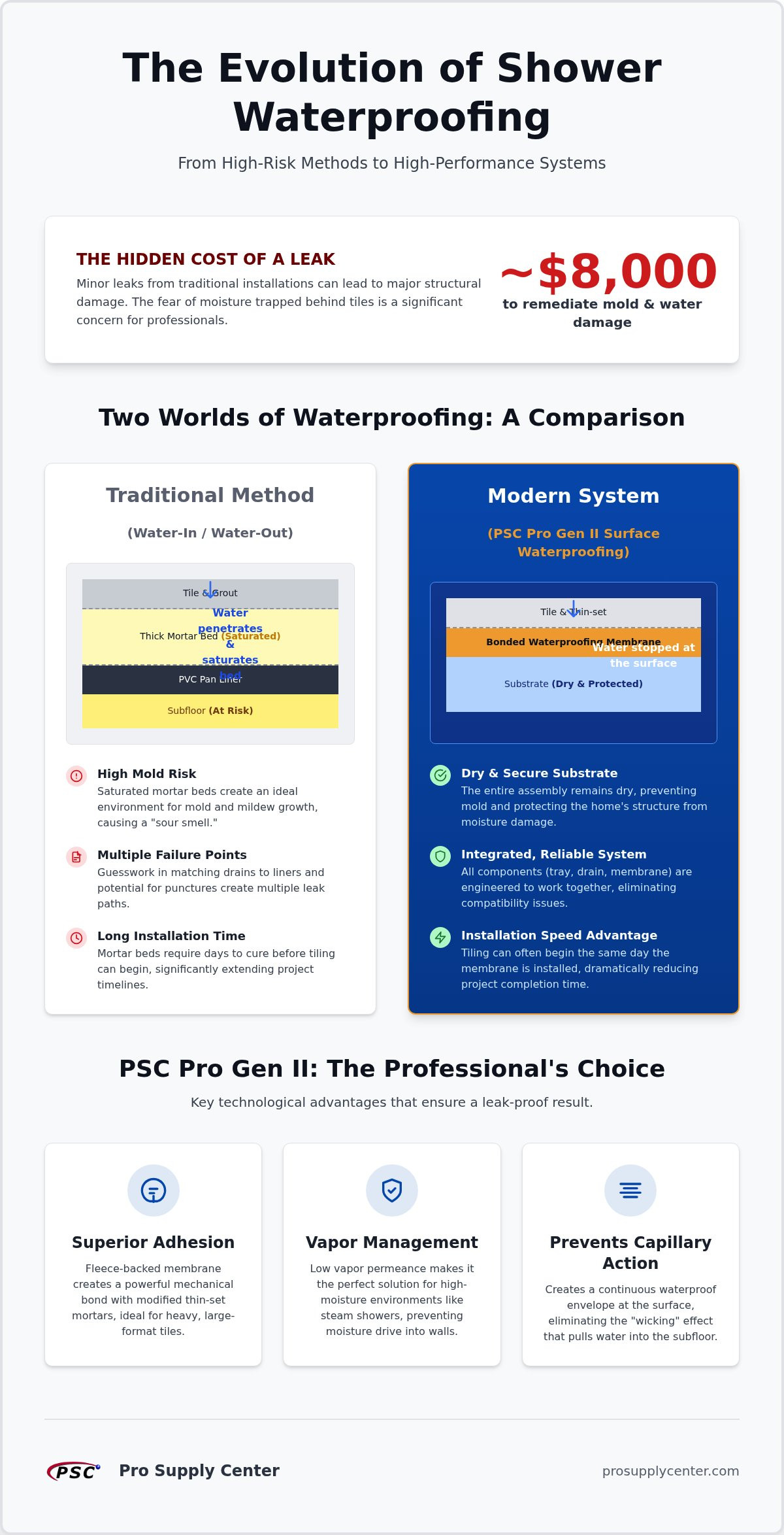
Did you know that remediating significant mold and water damage behind a shower wall can cost up to $8,000? This hidden expense often dwarfs the cost of the original tile work, turning a minor leak into a structural nightmare. Most professionals agree that the fear of moisture trapped behind tiles is a constant pressure, especially when traditional mortar bed installations take days to cure and offer multiple points of failure. You need a system that works the first time without the complexity of matching disparate drains and membranes.
This guide explores how modern waterproofing shower kits have evolved into integrated, water-exclusion systems that prioritize speed and reliability. We'll show you how to select professional-grade components that eliminate leaks while significantly reducing your total installation time. By leveraging advanced bonded technology, you can move away from the "tile and pray" method and toward a predictable, warranty-backed result. We'll cover the 2026 regulatory landscape, the technical advantages of modern waterproofing solutions, and the specific tools required to achieve a professional finish without lippage.
Key Takeaways
- Understand the critical shift from traditional PVC liners to modern bonded membranes that provide superior moisture management and vapor control.
- Learn how the PSC Pro Gen II system prevents capillary action through advanced engineering and enhanced thin-set bonding capabilities.
- Compare sheet membranes, liquid-applied systems, and pre-sloped foam trays to determine the most efficient solution for your specific project requirements.
- Discover how proper subfloor preparation and professional tile leveling systems maintain the structural integrity of the underlying waterproof barrier.
- Identify why professional-grade waterproofing shower kits provide the most reliable path to a leak-proof installation with fully compatible components.
What is a Waterproofing Shower Kit and Why Use One?
A professional waterproofing shower kit is an engineered system designed to create a fully sealed, watertight environment for tile installations. Unlike the traditional approach of sourcing a drain from one manufacturer and a liner from another, these kits provide a unified assembly where every component is tested for compatibility. This eliminates the guesswork often associated with matching drain flanges to waterproofing membranes. By using a pre-packaged system, you ensure that the transition points, specifically around the drain and corners, are structurally sound and chemically bonded to prevent moisture bypass.
The industry has moved away from traditional PVC pan liners toward modern bonded membranes. This shift is driven by the need for better vapor management and mold resistance. While older methods allowed water to saturate a thick mortar bed before reaching a buried liner, modern waterproofing shower kits stop water directly beneath the tile. This "surface waterproofing" approach keeps the substrate dry, which prevents the "sour smell" often associated with damp, slow-drying mud beds. Gen II technology represents the current peak of this evolution, offering superior bonding capabilities with modified thin-set mortars and enhanced vapor protection for steam showers.
Components of a Professional Shower Kit
A high-quality kit typically includes a pre-sloped shower tray, which is critical for ensuring the mandatory 1/4 inch per foot slope toward the drain. These trays remove the risk of "birdbaths" or standing water that can occur with hand-sloped mortar. The kit also features a bonded waterproofing membrane, either in sheet form or liquid-applied, that serves as the primary moisture barrier. Integrated drains and curbs complete the system. The drain flange is specifically designed to bond with the membrane, creating a seamless transition that traditional clamping-ring drains can't match. When these components work together, they form a unified seal that protects the home's structure from long-term moisture damage.
Traditional vs. Modern Waterproofing Methods
Traditional "Water-In/Water-Out" systems rely on a sloped subfloor, a PVC liner, and a heavy mortar bed. In this setup, water travels through the grout and mortar to reach the liner. This often leads to saturated subfloors that take days to dry, creating an ideal environment for mold growth. Modern surface waterproofing is significantly more efficient. By applying the membrane directly to the surface of the tray and walls, you keep the entire assembly dry. This method also offers a major speed advantage. You can often begin tiling immediately after the membrane is installed, rather than waiting for a mud bed to cure. For contractors looking to maximize efficiency, the PSC Pro Gen II Waterproofing System provides a reliable, fast-track solution that meets the most stringent modern building codes.
Evaluating the PSC Pro Gen II Waterproofing System
The PSC Pro Gen II Waterproofing System represents a significant technical advancement over first-generation bonded membranes. Its core engineering focuses on high-performance thin-set bonding. Unlike older systems that often struggled with modified thin-set mortars, Gen II technology is designed to create a permanent mechanical bond with a wider range of adhesives. This versatility is essential when installing diverse materials, ranging from intricate mosaics to heavy, large-format porcelain slabs. The system's low vapor permeance makes it particularly effective in high-moisture environments like steam showers, where moisture drive can otherwise compromise the wall assembly.
A primary benefit of this unified system is its ability to prevent capillary action. In traditional setups, water can "wick" through the mortar bed and find its way into the subfloor through small gaps in the liner. The PSC Pro Gen II eliminates this by creating a continuous, waterproof envelope at the surface. Because the membrane is bonded directly to the substrate, there's no space for water to travel or collect. This proactive water-exclusion strategy ensures the underlying structure remains dry and structurally sound for the life of the installation. Professionals who prioritize reliability often choose these waterproofing shower kits to avoid the callbacks associated with saturated subfloors.
The Bonded Membrane Advantage
Fleece-backed membranes are the professional choice for tile adhesion. The fleece layer provides a massive surface area for the thin-set to bite into, ensuring the tile stays exactly where it's placed. Managing corners and seams is often where waterproofing fails; however, this system uses specialized pre-formed components to seal these critical points. These components are flexible enough to handle minor structural movement without cracking or losing their seal. This flexibility is vital in new constructions where settling is common and rigid systems might fail.
Integrated Hardware: Drains and Niches
A truly effective waterproofing envelope includes more than just the walls and floor. It must integrate seamlessly with hardware like drains and niches. The PSC Pro Gen II uses a specialized drain flange that bonds directly to the membrane. This creates a transition that's far more reliable than a standard clamping-ring drain. Prefabricated shower niches also play a role in maintaining structural integrity. Rather than framing a niche and trying to waterproof it manually, these pre-sealed units fit directly into the wall assembly. You should consider the PSC Pro Gen II Waterproofing System if you want a kit where the curb, drain, and niche all function as a single, impenetrable unit. This level of integration reduces the margin for error on the job site and ensures the curb is fully integrated into the waterproofing envelope.
Buying Guide: Comparing Shower Kit Technologies
Selecting the right technology for a project depends on the specific moisture load and the required timeline. While there are many options on the market, most professional installations boil down to a choice between sheet membranes and liquid-applied systems. Sheet membranes, such as those found in high-end waterproofing shower kits, provide a factory-controlled thickness that ensures consistent protection across the entire surface. Liquid membranes offer flexibility for complex shapes but are prone to "holidays" or thin spots if the installer doesn't carefully monitor the wet-film thickness during application.
The choice between pre-sloped foam trays and traditional mortar beds is often a question of labor versus material cost. A traditional mud bed requires significant skill to achieve the mandatory 1/4 inch per foot slope toward the drain. In contrast, foam trays are engineered with the pitch built-in, which eliminates the risk of standing water and "birdbaths." Because foam technology is so versatile in both construction and logistics, those who need to protect specialized equipment or materials during transit can explore Foam Packaging for custom solutions. For most contractors, the time saved by using a prefabricated tray far outweighs the higher initial price of the components. When evaluating a kit, you should check for completeness; a professional system isn't just a tray and a roll of fleece. It must include pre-formed inside and outside corners, pipe gaskets, and mixing valve seals to create a truly closed system.
Standard vs. Steam Shower Requirements
Steam showers present a much higher technical challenge than standard enclosures. Vapor management is the priority here, as high-temperature steam can penetrate materials that are otherwise waterproof to liquid. This requires a membrane with a very low perm rating to prevent moisture from reaching the wall studs. If you're building a steam unit, the waterproofing must extend to the ceiling to capture rising vapor. Components used in these environments must be rated for high-temperature stability to ensure the bond doesn't degrade over time under constant thermal cycling.
Curbless and Walk-In Considerations
Modern barrier-free designs require specialized waterproofing shower kits that account for floor height transitions. To achieve a flush entry, you often need to recess the subfloor or use a low-profile tray specifically designed for curbless applications. Integrating a linear drain is a common strategy for these designs, as it allows the floor to slope in a single plane toward one wall. This setup enables the use of large-format tiles without the need for the diagonal "envelope cuts" required by traditional center-point drains. Ensuring the membrane transitions seamlessly from the shower floor to the rest of the bathroom floor is critical for preventing moisture migration outside the immediate splash zone.
Installation Success: Beyond the Waterproofing
Successful installation doesn't stop once the membrane is bonded. Even the most advanced waterproofing shower kits will fail if the underlying structure is unstable or if the final tiling phase is rushed. It's a mistake to view waterproofing as a standalone step; it's the middle phase of a three-part system that includes the substrate, the barrier, and the tile finish. If any part of this chain is weak, the integrity of the entire shower is compromised. Professionals know that the work you do before and after applying the membrane determines whether a shower lasts for decades or fails within a few years.
Substrate Readiness
Subfloor deflection is the primary cause of membrane failure and cracked grout lines. Before you place a shower tray, the subfloor must be deflection-free and meet TCNA standards for the specific tile type you're using. For example, natural stone requires a stiffer floor than ceramic. When installing premium materials from a supplier like Turkish Marble Company, ensuring a rigid substrate is even more critical to protect the stone's integrity. Walls must be checked for plumb and corners for squareness. If a wall is bowed, the membrane will follow that curve, making it difficult to set tile without excessive thin-set. Always clean and prime your surfaces. Dust and debris act as a bond-breaker, preventing the thin-set from properly gripping the substrate or the back of the membrane fleece.
The Tiling Finish: Leveling and Lippage
The final tile layer does more than provide an aesthetic finish; it protects the waterproofing from physical damage. Using a Ceramic Tiles Leveling System is essential when working with modern large-format tiles. These systems prevent lippage, which is the vertical displacement between adjacent tiles. Lippage isn't just a trip hazard; it creates uneven pressure points on the membrane and makes it harder to maintain a proper seal at the grout lines. A level surface ensures that water flows correctly toward the drain without pooling in low spots. This professional finish preserves the unified seal of the waterproofing envelope by distributing weight and stress evenly across the tray.
Common installation errors often involve "wicking," where moisture migrates through thin-set that has bridged the waterproof barrier to a porous material like drywall. You must ensure the membrane extends high enough and that all pipe penetrations are sealed with gaskets. Before you consider the job done, perform a 24-hour flood test. As required by the 2026 plumbing codes, fill the shower base with water to at least 2 inches above the threshold. This simple test is the only way to verify that your waterproofing shower kits were installed correctly before you commit to the final tile and grout.
Properly managing water within the home is only half the battle; for properties that rely on independent waste systems, partnering with a specialist like Texas Septic Solutions ensures that your drainage and septic infrastructure is as reliable as your new shower.
The Pro Supply Center Advantage for Contractors
Choosing a supplier is as critical as choosing the materials themselves. For trade professionals, the value of waterproofing shower kits lies in their functional reliability and the technical support behind them. Pro Supply Center operates as a national supplier specializing in contractor-grade tiling accessories, moving beyond the role of a typical retailer to act as a dependable partner on the job site. We curate our selection to ensure every component, from the membrane to the drain flange, meets the rigorous demands of modern construction and high-moisture environments.
Efficiency in the field is driven by the availability of integrated components. When you source a complete kit, you aren't just buying a tray; you're securing a system where integrated shower niches and professional drains are designed to work in tandem. This level of integration eliminates the common frustration of mismatched parts that can stall a project. By providing a comprehensive ecosystem of products, including advanced leveling systems and specialized adhesives, we help contractors maintain high standards of quality while meeting tight project deadlines.
Why Professionals Choose PSC Pro Gen II
The PSC Pro Gen II system is engineered specifically for the rigors of modern job sites. One of the primary reasons professionals make the switch is the simplified installation process that actively reduces the risk of callbacks. Gen II technology offers superior bonding and vapor management, allowing it to perform under the high-pressure conditions of steam showers and heavy-use commercial installations. It's also designed for broad compatibility with various professional-grade adhesives, giving installers the flexibility they need when working with different tile types and substrate conditions.
Next Steps for Your Project
Preparation is the final step before the physical build begins. Before you start the installation, perform a thorough inventory check to ensure you have all necessary accessories, such as pipe gaskets, mixing valve seals, and corner reinforcements. We recommend consulting the technical manuals provided with our systems to address any specific job-site conditions that might require unique thin-set applications or substrate priming. You can order your complete waterproofing shower kits for national delivery, ensuring your team has the professional-grade supplies needed to finish the job correctly. Focusing on these hidden details is what separates a standard build from a professional, leak-proof installation that stands the test of time.
Securing Long-Term Performance for Modern Installations
Achieving a leak-proof shower in 2026 requires a shift from outdated water-management methods to advanced water-exclusion. By utilizing professional waterproofing shower kits, you eliminate the structural risks of saturated mortar beds and the organic growth associated with slow-drying subfloors. The PSC Pro Gen II technology ensures a maximum mechanical bond that handles the thermal and structural stresses of modern bathrooms. It's the most reliable way to protect a home's integrity while delivering a finish that meets the highest trade standards.
Efficiency on the job site depends on having a complete system where components like drains, niches, and fleece-backed membranes are engineered for compatibility. Using a unified assembly reduces installation time and virtually eliminates the common failure points found in piecemeal setups. When you combine these integrated systems with professional leveling tools, you achieve a surface that's both technically sound and visually perfect. Your reputation as a professional is built on the durability of your work, and just as you wouldn't compromise on your waterproofing system, many contractors trust cctvsecuritypros.com for professional-grade surveillance equipment that matches the high standards of their craftsmanship.
Shop PSC Waterproofing Shower Kits to secure the PSC Pro Gen II technology and comprehensive accessories needed for your next project. Build with the confidence that only a fully bonded, professional-grade system can provide.
Frequently Asked Questions
Can I use a waterproofing shower kit over an existing mortar bed?
Yes, you can apply a kit over an existing mortar bed if the substrate is structurally sound, properly sloped, and free of cracks. It's critical to clean the surface thoroughly to ensure the thin-set bonds correctly with the fleece of the membrane. If the existing bed is crumbling or shows signs of saturation, you should remove it to prevent trapping moisture or mold behind your new installation.
What is the difference between Gen I and Gen II waterproofing systems?
Gen II systems feature advanced chemical engineering that allows for superior bonding with a wider variety of modified thin-set mortars. While Gen I systems often required specific non-modified mortars to cure properly between non-porous layers, Gen II technology manages moisture and vapor drive more effectively. This makes it the preferred choice for high-performance environments like steam showers where moisture exclusion is critical.
Are these kits compatible with both liquid and sheet membranes?
Most professional waterproofing shower kits are designed as integrated systems specifically for fleece-backed sheet membranes. While you can technically use liquid membranes on certain trays, the best results come from using the sheet provided in the kit. This ensures a consistent factory-controlled thickness and prevents the thin spots or "holidays" that often occur with liquid applications in high-stress areas like corners.
Do I need a special type of thin-set to bond the membrane to the tray?
You must use a high-quality mortar that meets ANSI A118.4 or A118.15 standards for maximum bond strength. Most modern Gen II systems are compatible with modified thin-set mortars, which offer better adhesion to the tray and membrane fleece. Don't use mastic or pre-mixed adhesives, as these require air to dry and won't cure properly beneath an impenetrable waterproof barrier.
How do I ensure a curbless shower remains completely waterproof?
To secure a curbless design, you must extend the waterproofing membrane at least 12 to 24 inches beyond the shower area and onto the bathroom floor. You also need to recess the subfloor so the sloped tray sits flush with the rest of the room. This creates a continuous waterproof envelope that prevents water from migrating under the bathroom tiles if it splashes outside the immediate zone.
Is a vapor barrier necessary if I am using a waterproofing membrane?
A secondary vapor barrier like plastic sheeting is not necessary and can actually cause a "moisture sandwich" by trapping water between two layers. Modern bonded membranes act as both a liquid barrier and a vapor retarder. For steam showers, you simply need to verify that the membrane has a sufficiently low perm rating to handle high vapor pressure without requiring additional layers behind the wallboard.
Can I install a linear drain with a standard waterproofing shower kit?
You can install a linear drain, but it's essential to use a kit specifically designed for a single-plane slope. Standard waterproofing shower kits with center drains use four-way slopes, which don't align with the flat profile of a linear drain. When using a linear drain, the entire floor must pitch toward one wall, which allows for the use of large-format tiles without complex envelope cuts.
What should I do if my shower dimensions do not match the pre-sloped tray?
You can easily trim most foam trays with a standard utility knife or a fine-tooth saw to fit your specific footprint. If the shower area is larger than the tray, you can extend the slope by using a dry-pack mortar bed to match the height of the tray's edge. Always ensure the perimeter is fully supported and that you maintain a consistent 1/4 inch per foot slope for proper drainage.


