

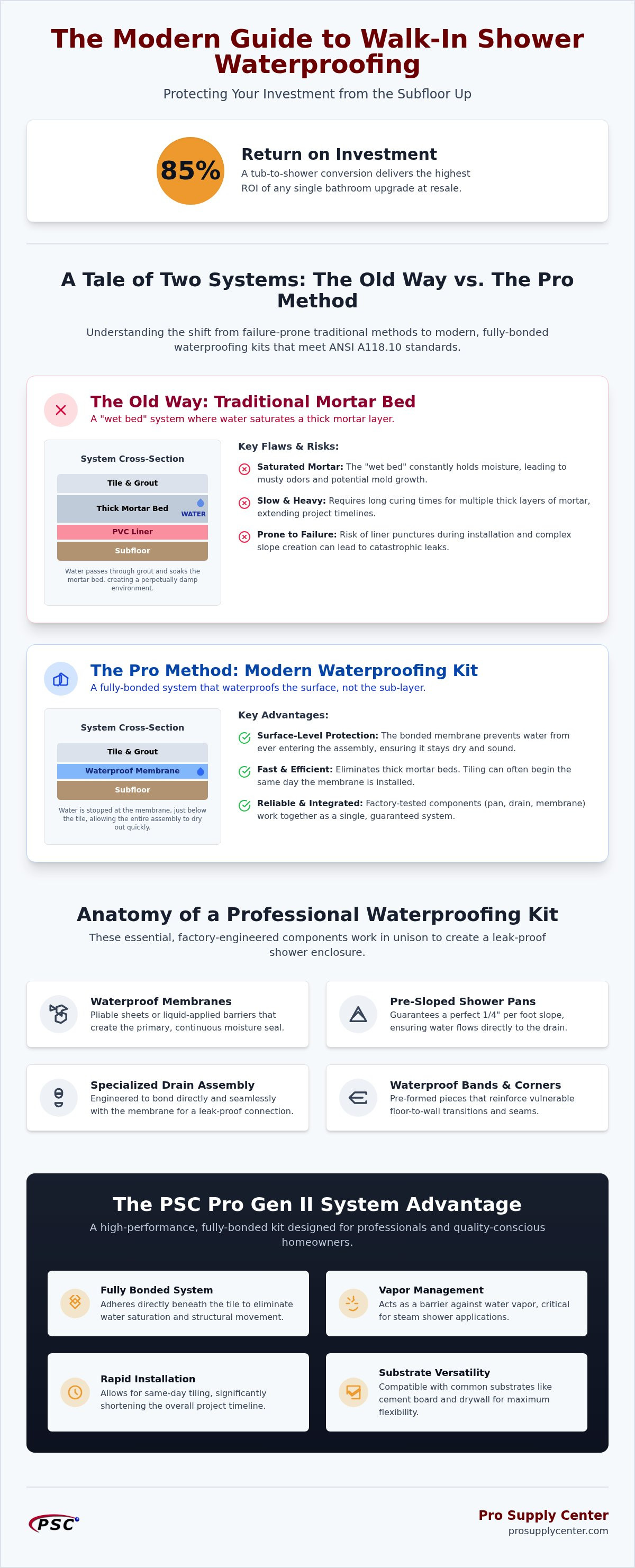
Did you know that a tub-to-shower conversion delivers a return on investment of up to 85 percent at resale, the highest of any single bathroom upgrade? While the aesthetic appeal of a curbless entry is undeniable, the technical execution often creates significant anxiety for contractors and homeowners alike. The fear of moisture damage rotting out subfloors is real, especially when dealing with the complexity of traditional mortar beds or confusion over membrane compatibility. Investing in a high-quality walk-in shower waterproofing kit isn't just about convenience; it's about meeting the ANSI A118.10 standard for a reliable, leak-proof installation.
We understand that you need a system that performs under pressure without the long wait times for mortar to cure. This guide will help you master the technical requirements and installation steps needed to create a fully bonded, water-tight shower enclosure. You'll learn how to select the right components for your project, ensuring every drain and niche integrates seamlessly. We'll preview the specific advantages of the PSC Pro Gen II Waterproofing System and provide a clear roadmap for achieving a professional-grade result that protects your home's structural integrity for decades.
Key Takeaways
- Understand how a walk-in shower waterproofing kit integrates membranes, pans, and drains into a single, factory-tested barrier to prevent moisture damage.
- Compare the efficiency of professional-grade systems against traditional mortar beds, noting the advantages of factory-guaranteed slopes and reduced labor time.
- Learn the technical specifications of the PSC Pro Gen II Waterproofing System and its compatibility with various substrates like cement board and drywall.
- Master the essential installation steps, from critical subfloor preparation to securing the pan and drain assembly with modified thin-set.
- Gain insights into properly sizing your system and enhancing your build with integrated components such as PSC Waterproofing Shower Kits that include niches and specialized drains.
What is a Walk-In Shower Waterproofing Kit?
A walk-in shower waterproofing kit is a pre-packaged system of integrated components engineered to create a permanent, water-tight seal within the shower enclosure. Unlike piecemeal solutions, these kits provide a comprehensive barrier that manages water from the moment it hits the tile. The primary objective is to prevent moisture from reaching the sensitive subfloor and wall studs, which are prone to rot and mold. Modern systems utilize a "fully bonded" approach. In this configuration, the tile is applied directly to the waterproof membrane using thin-set mortar. This creates a thin, efficient assembly that eliminates the need for thick, heavy mortar beds. It's a faster, more reliable way to build a shower that stays dry where it matters most.
The Shift from Traditional Liners to Modern Kits
Traditional shower construction relies on PVC liners buried beneath several inches of a mortar bed, often called a "mud set." While this method has been used for decades, it has a significant flaw: the mortar bed stays saturated. Water passes through the grout and tile, soaking the mortar until it reaches the liner below. This "wet bed" can lead to persistent dampness and odors. The process of waterproofing has evolved significantly to address these hygiene and structural concerns. Modern kits like the PSC Pro Gen II Waterproofing System keep water at the surface level. By stopping water at the membrane just below the tile, the entire system dries faster and remains structurally sound for the life of the home. The industry is moving toward these bonded systems because they eliminate the "sandwich" of wet material that traditional methods create.
Essential Components of a Professional Kit
A high-performance walk-in shower waterproofing kit includes several critical parts designed to work together without failure points. These components are factory-engineered to be compatible, reducing the risk of chemical reactions or bond failures between different materials.
- Waterproof membranes: These are typically pliable sheet membranes or roll-on liquid options that create the primary moisture barrier. Sheet membranes offer a consistent thickness that ensures uniform protection across the entire surface.
- Pre-sloped shower pans: These high-density foam or composite bases ensure a perfect 1/4 inch per foot slope toward the drain, removing the guesswork of manual screeding. This guarantees proper water evacuation and prevents pooling.
- Specialized drain assembly: These drains are specifically designed to bond with the membrane, creating a seamless transition that traditional clamping ring drains cannot match.
- Waterproof bands and corners: Pre-formed components protect the most vulnerable areas of the shower, such as the floor-to-wall transitions and 90-degree corners. These provide extra reinforcement where structural movement is most likely to occur.
Anatomy of the PSC Pro Gen II Waterproofing System
The PSC Pro Gen II Waterproofing System is a comprehensive walk-in shower waterproofing kit designed for high-performance results. While traditional methods rely on unbonded layers, this system uses a fully bonded approach. In an unbonded system, the waterproof liner is separated from the tile by a thick mortar bed, which often leads to water saturation and "sour" smells. A bonded system adheres the membrane directly beneath the tile. This eliminates the water reservoir and ensures the assembly moves as a single, structurally sound unit. It's a pragmatic solution that prioritizes long-term utility over outdated construction habits.
Flexibility is a core strength of this system. It's compatible with several common substrates, including cement board and even drywall in specific applications. This versatility allows contractors to maintain speed without sacrificing quality. For those installing steam showers, the PSC Pro Gen II provides essential vapor management properties. It acts as a barrier against both liquid water and water vapor, which is critical for preventing moisture from penetrating the wall cavity and causing hidden rot. Professionals can often begin tiling the same day the membrane is installed, significantly shortening the project timeline.
The PSC Pro Gen II Membrane Advantage
The sheet membrane at the heart of this system is engineered for maximum durability. It features a high-density polyethylene core that provides a reliable moisture barrier while remaining pliable enough for easy handling. This high bond strength is particularly important for modern bathroom designs that utilize large format tiles. Because these tiles are heavy, they require a substrate that won't shear or delaminate under weight. The membrane also provides inherent resistance to mold and mildew growth. By keeping the wall cavity dry, it removes the organic moisture necessary for fungal colonies to thrive.
Integrated Drains and Sealing Tapes
The drain is often the most vulnerable point in any shower. Traditional clamping ring drains are prone to failure at the weep holes, but the PSC integrated drain system eliminates this common leak point. It creates a seamless mechanical and chemical bond with the membrane. Meeting International Plumbing Code requirements for shower liners is much simpler when using a system designed for full integration. This ensures that every drop of water is directed into the plumbing rather than into the subfloor.
Using pre-formed inside and outside corners further reduces the risk of installer error. These components provide a factory-guaranteed seal at the most difficult transition points, such as where the floor meets the wall. When combined with specialized sealing tapes, the result is a continuous, water-tight skin. The PSC Pro Gen II Waterproofing System provides these components in a single, verified package that takes the guesswork out of complex installations.
Mortar Beds vs. Waterproofing Kits: A Performance Comparison
Traditional mortar beds, often called "mud sets," have been the trade standard for decades. However, they demand a high level of installer skill to achieve the correct slope and a smooth finish. A modern walk-in shower waterproofing kit removes this variability by providing a factory-engineered, pre-sloped pan. This ensures a perfect 1/4 inch per foot pitch every time. Beyond accuracy, weight is a significant factor. A standard mortar bed can weigh several hundred pounds, adding significant stress to the floor joists. In contrast, the high-density polystyrene pans found in professional kits are lightweight and easy to handle, making them ideal for second floor renovations where structural load is a concern.
Perhaps the most critical difference is the cure time. Traditional mortar typically requires 24 to 72 hours to fully cure before you can apply a membrane or tile. Bonded systems allow for immediate tile application once the membrane is set. This speed is a game changer for project schedules and client satisfaction.
Labor and Time Efficiency on the Job Site
For professional contractors, time is the most valuable resource. Using a kit reduces the number of job site visits required to complete a single shower. Instead of mixing, pouring, and screeding mortar on day one and returning days later to tile, you can often complete the waterproofing and begin tiling in a single shift. The PSC Pro Gen II Waterproofing System streamlines this workflow by providing all necessary components in one box. This eliminates the need to source compatible parts from different manufacturers, reducing procurement errors and logistical delays. It's a pragmatic approach that prioritizes efficiency without sacrificing the integrity of the build.
Reliability and Long-Term Durability
Traditional mortar systems are prone to "wicking," where water is absorbed into the bed and travels upward into the wall cavity. This often leads to mold growth and grout discoloration. Because a walk-in shower waterproofing kit uses a bonded membrane at the surface, water never reaches a substrate where it can pool or wick. Factory-sloped pans also prevent standing water, which is the leading cause of slip hazards and bacterial buildup. By choosing an integrated kit, you benefit from a single manufacturer warranty. This provides confidence that every component, from the drain to the sealing tape, is designed to work together for the life of the installation.
How to Install a Walk-In Shower Waterproofing Kit
This commitment to using the right components for a lasting result is equally important in exterior projects. For homeowners extending their renovation efforts to the garden, Bayside Pavers provides specialized advice on selecting the ideal plants for the joints of stone walkways to ensure a professional finish.
Successful installation of a walk-in shower waterproofing kit begins with the subfloor. It must be level, clean, and structurally sound. Any deflection in the subfloor can compromise the bond between the pan and the substrate. Once the base is prepared, apply a modified thin-set to the subfloor using a notched trowel. Embed the pre-sloped pan firmly into the mortar, ensuring the integrated drain assembly aligns perfectly with the waste pipe. This mechanical connection is the most critical part of the floor assembly, and experts like Prodigy Mechanical point out that precision during this phase is vital for a leak-free result. It's essential to ensure the pan is fully supported to prevent future cracking in the tile or grout.
Curbless designs require extra attention at the transition between the shower floor and the bathroom floor. The membrane must extend beyond the shower area to prevent water from migrating under the bathroom tiles. When installing integrated shower niches, apply the membrane into the recess to create a continuous skin. Achieving 100 percent thin-set coverage is vital for maximum adhesion. Use a flat trowel to press out air bubbles and ensure the membrane is fully embedded. This prevents the formation of pockets where water could eventually collect and cause issues with the bond.
Common Mistakes to Avoid During Installation
One frequent error is using the wrong thin-set. Many manufacturers require specific modified or unmodified thin-sets depending on the substrate and the membrane type. Always check the specs for your specific kit to avoid bond failure. Another mistake is ignoring overlap requirements. If you don't maintain the minimum two-inch overlap at seams, you risk water penetration. Finally, don't skip the cleaning step. Dust and debris on the substrate lead to debonding, which can cause the entire system to fail over time. For a reliable build, choose PSC Waterproofing Shower Kits to ensure all your components are compatible from the start.
Choosing the Right PSC Waterproofing Shower Kit for Your Project
Selecting a walk-in shower waterproofing kit requires a balance between technical requirements and the final design vision. The first step is accurate sizing. You must match the pan dimensions to your specific bathroom layout, accounting for the finished wall thickness. When sketching these critical layout lines onto the substrate, high-quality markers from PoscART provide the visibility and permanence needed to guide your installation. While high-density foam pans allow for minor trimming at the perimeter, choosing a kit that closely matches your footprint ensures the pre-sloped pitch remains consistent. The PSC Pro Gen II system is engineered to accommodate these variations, providing a stable foundation for both standard and custom walk-in designs.
A modern walk-in shower often features a curbless entry, which pairs perfectly with a linear shower drain for tile. These drains allow for a single-plane slope, eliminating the need for complex envelope cuts on large format tiles. To maintain the waterproof barrier while adding functionality, you can incorporate a recessed ceramic soap dish or pre-formed shower niches. These components are designed to bond directly with the PSC Pro Gen II membrane, preventing the common leaks associated with retrofitted accessories. Using integrated hardware ensures that your design flourishes don't become future failure points.
The Professional Advantage with Pro Supply Center
Choosing a single national supplier like Pro Supply Center provides a significant logistical advantage. Instead of managing multiple vendors, you receive a complete system with verified compatibility. This is especially critical for commercial projects or high-end residential builds where downtime is costly. Before you begin your build, run through a final checklist: verify subfloor stability, confirm thin-set compatibility, and ensure you have enough sealing tape for all transitions. Accessing contractor-grade PSC Waterproofing Shower Kits means you're using materials tested for professional-grade reliability. Once the waterproofing is verified with a flood test, you can proceed to the finish work with total confidence in the structural integrity of the enclosure.
Secure Your Next Project with Professional-Grade Waterproofing
Transitioning from traditional mortar to a modern walk-in shower waterproofing kit represents a significant upgrade in both job site efficiency and long-term reliability. You've seen how the PSC Pro Gen II system manages moisture at the surface, effectively eliminating the saturated mud beds that often lead to mold and structural decay. By selecting an integrated system, you ensure that every component, from the pre-sloped pan to the integrated niches, works as a single, factory-tested unit. This approach not only saves hours of labor but also provides a level of consistency that manual methods can't match.
Success in any build depends on having the right materials ready when you need them. Pro Supply Center is a trusted national supplier, providing contractor-grade solutions designed to withstand the rigors of both residential and commercial projects. Don't leave your bathroom's structural integrity to chance; choose a system that prioritizes speed without sacrificing durability. Shop PSC Waterproofing Shower Kits at Pro Supply Center today and start your next build with a foundation you can trust. Your commitment to quality materials now will pay off in a leak-proof, high-performance shower for years to come.
Frequently Asked Questions
Can I use a walk-in shower waterproofing kit on a wooden subfloor?
You can use a walk-in shower waterproofing kit on a wooden subfloor if the structure meets L/360 deflection standards. The subfloor must be clean, level, and securely fastened to the joists. Most professional kits use a pre-sloped foam pan that bonds directly to the wood using modified thin-set. This creates a stable foundation that prevents grout from cracking due to structural movement. Always verify the subfloor thickness matches the manufacturer's requirements for load-bearing stability.
Do I need to use a specific type of thin-set with the PSC Pro Gen II system?
You must use a high-quality modified thin-set to bond the PSC Pro Gen II pan to the subfloor. For the membrane itself, the type of thin-set depends on the substrate and the specific membrane requirements. Many professionals prefer unmodified thin-set for the membrane to allow for proper hydration and curing between two non-porous layers. Always refer to the technical data sheet provided with your kit to ensure the bond meets ANSI A118.4 or A118.11 standards.
How long does it take to install a complete waterproofing shower kit?
Installing a complete walk-in shower waterproofing kit typically takes one full working day for a seasoned professional. This includes subfloor preparation, pan setting, and membrane application on the walls. Unlike traditional mud beds that require days to cure, these bonded systems allow you to finish the waterproofing and potentially begin tiling within the same shift. Total project time will vary based on the complexity of niches, drains, and the overall shower dimensions.
Is a flood test really necessary if I follow all the installation steps?
A 24-hour flood test is essential to verify the integrity of your installation before you apply tile. Even if you follow every step perfectly, a flood test identifies minor pinholes or seam failures that could lead to catastrophic subfloor damage. Plug the drain and fill the pan with water to the top of the curb or transition. If the water level remains constant after 24 hours, you have confirmation that your enclosure is truly water-tight. Should you discover a leak in the drain line or an issue with the existing plumbing during this test, an emergency plumber Central Florida can provide the rapid assistance needed to fix the problem before you proceed with tiling.
Walk-in shower kits are ideal for curb-less or ADA-compliant entries because the pre-sloped pans can be recessed into the subfloor. This creates a seamless, zero-threshold transition between the bathroom floor and the shower area. When planning a curbless design, ensure the waterproofing membrane extends at least 12 inches beyond the shower entry. This extra coverage protects the surrounding floor from overspray and moisture migration, ensuring the entire bathroom remains structurally sound.
What is the difference between a sheet membrane and a liquid waterproofing liner?
Sheet membranes provide a factory-guaranteed, uniform thickness that eliminates the risk of thin spots common with liquid liners. They offer immediate waterproofing and don't require the multiple coats or drying times associated with roll-on products. Liquid liners are often used for complex geometries, but sheet systems like the PSC Pro Gen II are preferred for their superior vapor management and high bond strength. This makes them more reliable for heavy large-format tile installations.
Can I install a walk-in shower kit over existing tile?
You shouldn't install a walk-in shower waterproofing kit over existing tile. For a reliable bond, the system must be applied directly to a clean, structurally sound substrate like cement board or a plywood subfloor. Tiling over tile creates a vapor sandwich that traps moisture and leads to mold growth or bond failure. Always strip the shower back to the studs and subfloor to ensure the new system integrates correctly with the plumbing and wall transitions.
How do I handle corners and seams in a steam shower application?
In a steam shower, handling corners and seams requires a vapor-tight approach. You must overlap all membrane seams by at least two inches and use specialized sealing bands on all transitions. Because steam particles are smaller than liquid water droplets, the system must act as a total vapor barrier. Ensure you use pre-formed inside and outside corners to eliminate gaps. This prevents pressurized steam from penetrating the wall cavity and causing hidden rot behind the tiles.


