
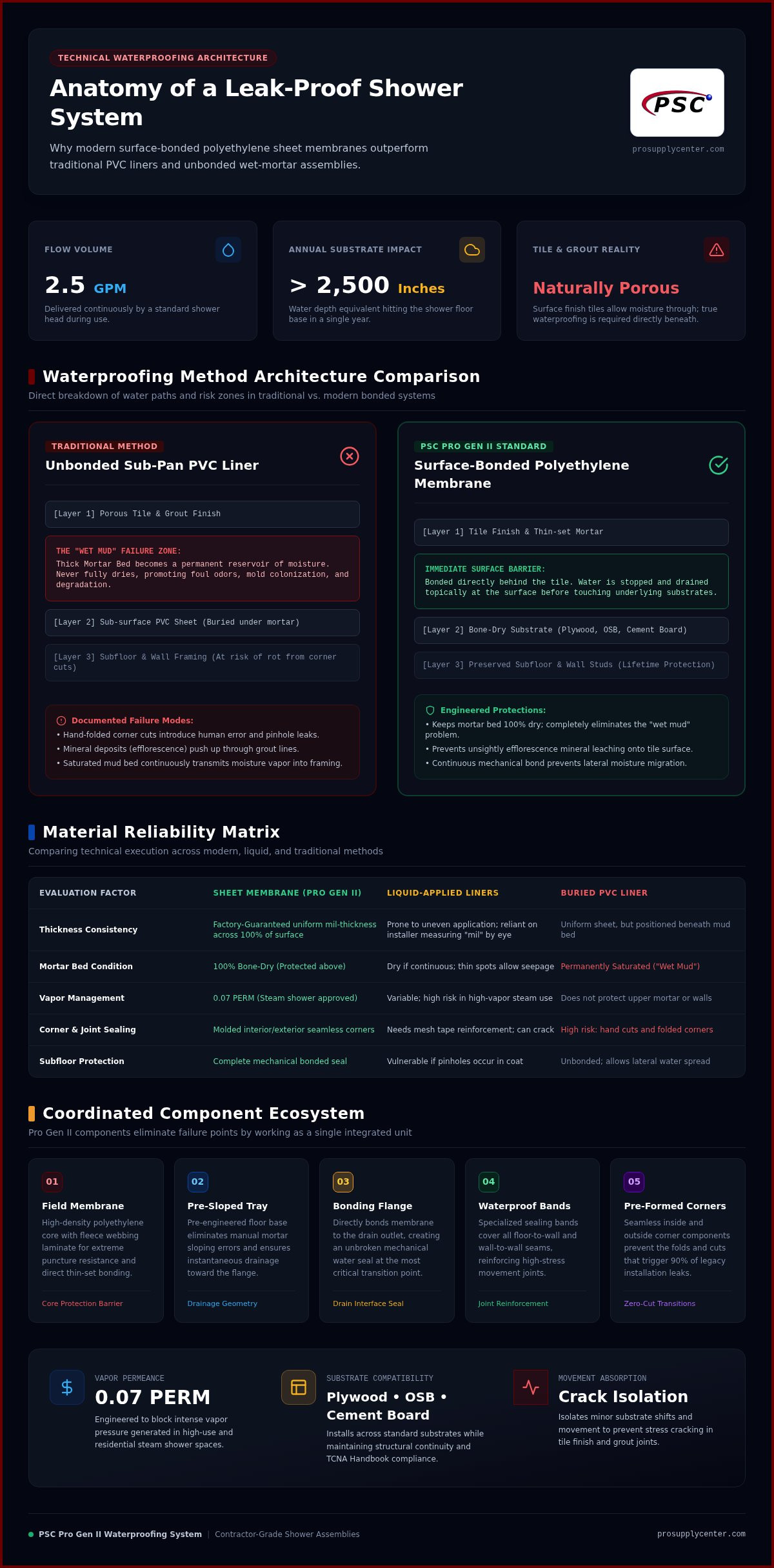
A typical shower head delivers roughly 2.5 gallons of water every minute, which can equate to more than 2,500 inches of water falling on your shower floor in just one year. It's a staggering volume of liquid for a space that most people assume is protected by tile and grout. You likely already know that these finish materials are naturally porous, meaning the real work happens behind the scenes. The fear of a hidden leak causing structural rot or toxic mold is a valid concern for any homeowner or contractor.
Building a reliable leak proof shower system doesn't have to be a confusing choice between overpriced name brands and unreliable DIY methods. This guide will teach you how to eliminate water damage risks forever by choosing and installing a professional-grade integrated system. We'll explain the technical specifications of the PSC Pro Gen II Waterproofing System, compare liquid versus sheet membranes, and show you how to achieve a mold-free bathroom with a lifetime guarantee. By the end, you'll have the practical knowledge to ensure your installation remains bone-dry for decades.
Key Takeaways
- Understand why surface-bonded membranes outperform traditional PVC liners by preventing water from saturating the mortar bed.
- Learn how to select a professional-grade leak proof shower system that utilizes a high-density polyethylene core for maximum moisture protection.
- Compare the reliability of sheet membranes against liquid liners to ensure a consistent, uniform thickness across every square inch of the installation.
- Identify the essential components of an integrated kit, including the bonding flange and pre-sloped tray, that work together to eliminate common failure points.
- Master the basics of project planning to calculate material needs accurately and avoid the stress of incompatible components.
What Defines a Modern Leak Proof Shower System?
A modern leak proof shower system is an integrated assembly designed to manage water at the very surface of the installation. Unlike older methods that allowed moisture to penetrate deep into the substrate, these professional systems use a bonded membrane to create a watertight seal directly behind the tile. This approach follows established Waterproofing principles by ensuring that every component, from the drain flange to the wall panels, works as a single, cohesive unit. When you eliminate the gaps between materials, you eliminate the paths water takes to reach your subfloor.
One of the most significant reasons the industry has shifted toward these integrated systems is the "wet mud" problem associated with traditional PVC liners. In a traditional setup, the waterproof liner sits beneath a thick bed of mortar. Because tile and grout are naturally porous, water eventually seeps through and saturates that mortar bed. This creates a permanent reservoir of moisture that never fully dries, leading to unpleasant odors, recurring mold, and the eventual degradation of the shower floor. A modern leak proof shower system solves this by keeping the mortar bed completely dry.
Vapor permeance also plays a critical role in long-term durability. High-use showers and steam rooms generate significant vapor pressure that can push moisture through walls, causing hidden rot behind the tile. Professional-grade sheet membranes are engineered with low perm ratings to block this vapor. While liquid-applied liners were popular for a time, many contractors are moving back to sheet membranes for high-moisture areas. Liquid liners are prone to inconsistent thickness during application, whereas sheet membranes provide a factory-guaranteed barrier that doesn't rely on the installer's ability to measure "mil-thickness" by eye.
The Evolution of Shower Waterproofing
Shower construction has come a long way from the days of hand-soldered copper pans and thick PVC sheets. These older methods were highly dependent on human error, especially at the corners where folds and cuts often led to slow, hidden leaks. The shift to topical waterproofing means that drainage happens immediately at the surface. This change doesn't just protect the finish; it safeguards the underlying wall studs and subfloor from the structural rot that typically ends a shower's lifespan prematurely.
Bonded vs. Unbonded Systems
The core difference in modern systems is the mechanical bond. In a bonded system, the waterproofing membrane is adhered directly to the substrate using thin-set mortar. This creates a continuous seal from the floor to the ceiling, preventing water from traveling laterally behind the walls. By keeping moisture at the surface, you also prevent efflorescence, those white, powdery mineral deposits that often ruin grout lines in unbonded systems. It's a cleaner, more stable way to build that ensures the integrity of the entire bathroom structure.
The PSC Pro Gen II Waterproofing System: Professional Grade Performance
Choosing the right materials determines whether a bathroom renovation succeeds or fails. The PSC Pro Gen II Waterproofing System provides a contractor-grade solution for building a truly dependable leak proof shower system. At the core of this system is a high-performance, high-density polyethylene membrane. Material density matters because it dictates how well the barrier resists punctures on the job site and prevents water transmission over time. This membrane installs directly over common substrates including plywood, OSB, and cement board, allowing installers to maintain structural continuity while meeting strict TCNA Handbook standards.
True waterproofing requires a system-based approach rather than a mix-and-match strategy. The Pro Gen II system relies on a coordinated group of components designed to eliminate weak points. This ecosystem includes the main field membrane, specialized waterproofing bands for seams, and pre-formed interior and exterior corners. By wrapping the entire shower enclosure in these matching components, you ensure that high-stress movement joints remain completely sealed against water intrusion.
Key Features of Pro Gen II Membrane
The technical specifications of the membrane reflect its commercial utility. With a verified vapor permeance rating of 0.07 PERM, it easily handles the intense moisture demands of residential steam showers. It also provides excellent crack isolation properties, which means it absorbs minor subfloor shifts and prevents that movement from cracking your tile grout lines. Installation is straightforward because of the advanced fleece webbing laminated to both sides. This webbing anchors deeply into high-quality modified thin-set mortar, creating an unbreakable mechanical bond that keeps the sheet perfectly flat during tile placement.
Why Contractors Choose PSC Pro Gen II
Trade professionals frequently choose this system over mainstream retail brands because it avoids unnecessary marketing markups while delivering exceptional performance under pressure. The PSC Pro Gen II Waterproofing System serves as the benchmark for independent contractor reliability in 2026. It gives installers total component compatibility without the premium price tag. If you want to eliminate project planning stress, sourcing a complete kit ensures you have every matching drain, band, and niche required for a successful, long-lasting build.
Comparing Shower Waterproofing Methods: Membranes vs. Liquid Liners
When choosing the core components for a leak proof shower system, the debate usually centers on liquid-applied membranes versus bonded sheet membranes. Both methods aim to achieve the same goal, but they differ significantly in their execution and risk management. The primary challenge with liquid liners is achieving a consistent mil-thickness. Without using a wet-film gauge, it's nearly impossible to ensure the barrier is thick enough to be waterproof but thin enough to prevent mud-cracking. Liquid application relies heavily on the installer's precision, which introduces a high degree of human error.
Sheet membranes offer a factory-guaranteed thickness across the entire surface. There's no guesswork involved. You know exactly how thick your barrier is before it even touches the wall. This consistency aligns with fundamental building science principles, which emphasize the need for a continuous, uninterrupted air and water barrier behind tile. Because backer boards aren't inherently waterproof, the reliability of the membrane is what ultimately protects the structure from long-term rot.
Drying times also separate these two methods. Liquid membranes often require 24 hours or more to cure between coats and before tiling can begin. In a professional setting, this downtime is expensive. Bonded sheet systems allow for same-day tiling, as the bond is mechanical and doesn't rely on evaporation. While sheet materials often carry a higher upfront price tag, the savings in labor and the reduction in project duration usually make them the more cost-effective choice for full-scale renovations.
When to Use a Liquid Waterproofing Liner
Liquid liners have a place in the industry, particularly for minor repairs or extremely complex, curved geometries where cutting a sheet is impractical. However, achieving a true leak proof shower system in corners and transitions is difficult with liquid liners. The product tends to pool in the bottom of corners or thin out over sharp edges as it dries. For these reasons, many trade professionals view liquid as a secondary backup or a detail-enhancer rather than a standalone primary system for a high-use shower environment.
The Superiority of Sheet Membranes
Factory-manufactured sheet membranes eliminate the risk of pinholes, which are tiny bubbles that can form in liquid coatings as they dry. These microscopic gaps are often invisible to the naked eye but allow water to bypass the barrier over time. Additionally, sheet systems perform better during seasonal expansion and contraction. The polyethylene core provides enough flexibility to bridge minor subfloor shifts without tearing. For a deep dive into these specifications, consult the PSC Pro Gen II Waterproofing System: The Professional Reference Guide.
Components of a Complete Waterproofing Shower Kit
Sourcing individual components from different manufacturers often introduces compatibility risks that compromise a leak proof shower system. A complete kit eliminates this vulnerability by providing an engineered ecosystem of parts designed to lock together perfectly. The physical foundation begins with a pre-sloped shower tray, which guarantees a precise pitch toward the drain so water cannot pool in stagnant zones. Next, the integrated shower drain utilizes a specialized bonding flange, creating a wide, flat surface where the topical membrane adheres directly to the plumbing connection. Waterproofing bands and pre-formed corners act as an essential insurance policy, sealing the high-stress joints where walls meet the floor. Prefabricated components remove the dangerous necessity of cutting and patching raw materials on site, which is where most manual installations fail.
The Integrated Shower Niche
Traditional recessed shelves require complex wood framing, precise backer board cuts, and multiple seams that are notorious for developing slow, hidden leaks behind the tile. Installing an integrated shower niche replaces this risky process with a single, pre-formed waterproof unit that mounts directly to the studs. The PSC Pro Gen II system seals seamlessly around these prefabricated inserts, ensuring that the critical transition from the wall membrane to the niche rim remains completely watertight. This engineering eliminates the common "shelf leak" found in custom-built cubbies, where water sits on poorly pitched tile sills and eventually rots the wall cavity.
Selecting the Right Shower Drain
The drain connection is the single most critical point in any shower build. Installers can choose between standard square configurations or a modern linear shower drain for tile, depending on the layout and tile size. Linear options allow for a single-slope floor, which accommodates large-format tiles without complex geometric cuts. Regardless of style, the drain flange must feature complete material compatibility with the topical sheet membrane to prevent delamination. High-quality systems feature integrated hair strainers and easy-clean designs, ensuring that routine maintenance doesn't disrupt the underlying seals over years of heavy use. To guarantee all your components match perfectly on your next project, view the available options and select your PSC Waterproofing Shower Kits today.
Planning Your Project with Pro Supply Center
Calculating the materials for a leak proof shower system requires precise measurements of the entire wet area. You'll need to account for the total square footage of the walls and floor, then add a 10% buffer for overlaps at the seams and waste during installation. Buying PSC Waterproofing Shower Kits simplifies this process significantly. These curated kits ensure you don't miss small but vital parts like mixing valve seals or pipe collars, which are often overlooked when sourcing components individually. Pro Supply Center focuses on providing professional-grade construction supplies that eliminate the guesswork from technical projects.
Planning also involves selecting the right tools for the job. Beyond the membrane itself, you'll need high-grade abrasives for cutting tile and specialized spacers to maintain consistent grout lines. By sourcing everything from a single professional supplier, you ensure that every material, from the thin-set to the drain flange, is compatible and designed to perform under pressure. This methodical approach to project planning is what separates a standard DIY effort from a lifetime-guaranteed professional installation.
Beyond Waterproofing: Tiling for Success
A successful build goes beyond just stopping water; it's about the final presentation and structural stability. A ceramic tile leveling system is essential for achieving a professional, lippage-free finish, especially when working with modern large-format tiles that are prone to bowing. We also recommend matching your drain finish to your bathroom hardware to maintain a cohesive aesthetic throughout the space. You can order the PSC Pro Gen II Waterproofing System directly for nationwide delivery across the United States, ensuring you have trade-grade supplies delivered straight to your job site or home.
Final Checklist for a Leak-Proof Install
Before you set the first tile, you must verify the integrity of your work. The 24-hour flood test is the non-negotiable final step. Plug the drain and fill the base with water to ensure there are no drops in level overnight. During the membrane installation itself, aim for at least 95% thin-set coverage to guarantee a permanent mechanical bond between the membrane and the substrate. PSC Waterproofing Shower Kits include all essential components for a code-compliant installation, giving you the confidence that your project meets modern building standards and will remain bone-dry for decades.
Build for Longevity with Professional Standards
A truly reliable installation depends on managing water at the surface rather than allowing it to saturate the mortar bed. Transitioning to a bonded system eliminates the structural risks associated with traditional liners and inconsistent liquid applications. By using factory-engineered sheet membranes and matching components, you ensure a continuous barrier that handles vapor and moisture without fail. This integrated approach isn't just about meeting code; it's about creating a bathroom that remains structurally sound for decades.
Selecting a professional leak proof shower system provides the security of contractor-grade reliability and complete system compatibility. Pro Supply Center supports your project with nationwide shipping on all kits, ensuring you have the right materials on site when you need them. Shop the PSC Pro Gen II Waterproofing System at Pro Supply Center to secure a high-performance solution without the brand-name markup. Take the next step toward a durable, mold-free build today.
Frequently Asked Questions
Is a leak proof shower system worth the extra cost?
Investing in a leak proof shower system is significantly more cost-effective than repairing structural rot later. While traditional PVC liners cost less upfront, they often lead to moisture saturation in the mortar bed. A modern integrated system protects the subfloor and wall studs, preventing the need for an expensive bathroom tear-out. It's a one-time insurance policy against hidden water damage, mold growth, and the degradation of your home's framing.
Can I install a waterproofing membrane over existing tile?
No, you shouldn't install a waterproofing membrane directly over existing tile. Effective systems require a mechanical bond to a stable substrate like cement board, plywood, or OSB. Installing over tile creates a layer where moisture can be trapped, leading to bond failure and potential mold. For a professional-grade result, always strip the shower down to the studs and install the system on a clean, approved surface that meets industry standards.
How long does a PSC Pro Gen II Waterproofing System last?
The PSC Pro Gen II Waterproofing System is designed to last for the entire lifespan of the shower installation. Because the high-density polyethylene core doesn't rot or degrade when exposed to moisture, the barrier remains intact as long as the structure is stable. When installed correctly with matching components, it provides a permanent seal that outlasts traditional liquid liners or PVC pans, which are more prone to seasonal wear and installer error.
What is the difference between a water barrier and a vapor barrier?
A water barrier stops liquid moisture from passing through, while a vapor barrier blocks moisture in its gaseous state. In high-moisture environments like steam showers, a low perm rating is essential to prevent vapor from pushing through walls and rotting studs. The PSC Pro Gen II membrane features a 0.07 PERM rating, making it an effective vapor manager that goes beyond simple liquid waterproofing to protect the home's structural integrity.
Do I need a special thin-set for a leak proof shower system?
Yes, the type of thin-set is critical for a secure bond. Unlike some competitor systems that require unmodified mortar, the PSC Pro Gen II Waterproofing System is specifically engineered for use with high-quality modified thin-set mortar. This allows for a stronger chemical and mechanical bond between the fleece webbing and the substrate. Always check the mortar specifications to ensure it meets ANSI standards for professional results, ensuring the tile remains flat and secure.
Can a DIYer install a complete waterproofing shower kit?
Yes, a serious DIYer can successfully install a complete waterproofing shower kit. These kits are designed to eliminate the guesswork by providing compatible components like pre-sloped trays, bonding flanges, and pre-formed corners. While the process requires precision and attention to detail, the integrated nature of the system reduces the risk of common manual errors. Following a methodical, step-by-step approach ensures that even a non-professional can achieve a code-compliant, watertight result.
How do I test if my shower system is truly leak proof before tiling?
The most reliable method is the 24-hour flood test. After the membrane and drain are installed but before tiling begins, you should plug the drain and fill the shower base with water. Mark the water level on the wall membrane and wait at least 24 hours. If the water level hasn't dropped, your system is airtight and watertight. This test is a non-negotiable step for verifying the integrity of the installation.
Why should I choose PSC Pro Gen II over big-box brand systems?
Choosing the PSC Pro Gen II Waterproofing System provides contractor-grade performance without the high marketing markup associated with mainstream retail brands. It offers superior compatibility with modified thin-set mortars, giving you a wider range of high-performance adhesive options. Additionally, the system is supported by national shipping across the United States. This provides access to specialized components like integrated hair traps and diverse drain designs that aren't always available in standard big-box retail kits.


