
The industry standard you've relied on for years might actually be the very thing slowing your installs and eroding your project margins. While many contractors reach for a bright orange roll out of habit, the market has evolved beyond the limitations of legacy systems. When evaluating Schluter Kerdi vs PSC Pro, you're no longer just comparing brands. You're choosing between traditional methods and a system engineered for modern job site realities.
You likely value the peace of mind that comes with a certified waterproofed shower, but you're probably tired of fighting stiff membrane corners and restrictive thin-set requirements that drive up material costs. We'll show you exactly how the PSC Pro Gen II Waterproofing System stacks up against the competition to help you choose the right membrane for your next project. This comparison provides a clear technical justification for switching systems by analyzing ANSI A118.10 compliance, real-world workability, and vapor management ratings. We will break down the physical attributes of both systems to ensure your next build stays on schedule and under budget without compromising quality.
Key Takeaways
- Analyze critical technical specifications like ASTM E96 vapor permeance ratings to ensure your shower installation exceeds standard moisture management requirements.
- Evaluate the direct differences between Schluter Kerdi vs PSC Pro Gen II to see how modern membrane flexibility solves common installation issues in tight corners.
- Understand the advantages of modified thin-set compatibility, which provides installers with a stronger bond and more flexibility in material selection.
- Identify how the PSC Pro Gen II system improves project margins for professional contractors by offering high-performance waterproofing at a better value.
- Learn how Gen II technology balances superior puncture resistance with a manageable material weight to streamline the waterproofing process on complex job sites.
The Evolution of Bonded Waterproofing Membranes
The shower construction industry has undergone a massive shift over the last two decades. Traditional systems relied on thick vinyl pan liners buried deep under a heavy mortar bed. While these were effective for a time, they often trapped moisture within the mud bed, leading to mold growth and slow drying times. Modern waterproofing methods have moved the barrier to the surface. By using polyethylene membranes bonded directly behind the tile, installers create a sealed envelope that protects the entire substrate from the start.
Polyethylene is the core of this evolution. It's a durable, chemically resistant plastic that provides a complete barrier against liquid water. As building codes have tightened, the industry has shifted its focus from simple water resistance to strict vapor-proof standards. This is especially critical in steam showers where vapor can bypass older barriers and rot wood studs. However, being a first-mover in this space often comes with a "legacy tax." Many contractors find they're paying a premium for brand names that haven't significantly updated their base technology in years, even as newer, more efficient manufacturing processes have emerged.
What is a Bonded Waterproofing System?
A bonded system uses a "sandwich" configuration to ensure structural integrity. It starts with a stable substrate, followed by a layer of thin-set mortar. The membrane is then embedded into the mortar, and the tile is installed directly on top. The success of this bond depends on the fleece-backing found on membranes like those in the Schluter Kerdi vs PSC Pro comparison. This fleece provides a mechanical tooth for the thin-set to grab, ensuring the tile doesn't delaminate over time. Vapor permeance is the measure of how much water vapor can pass through a material, and a lower rating is essential for preventing long-term moisture damage within wall cavities.
Why Contractors are Looking for Kerdi Alternatives
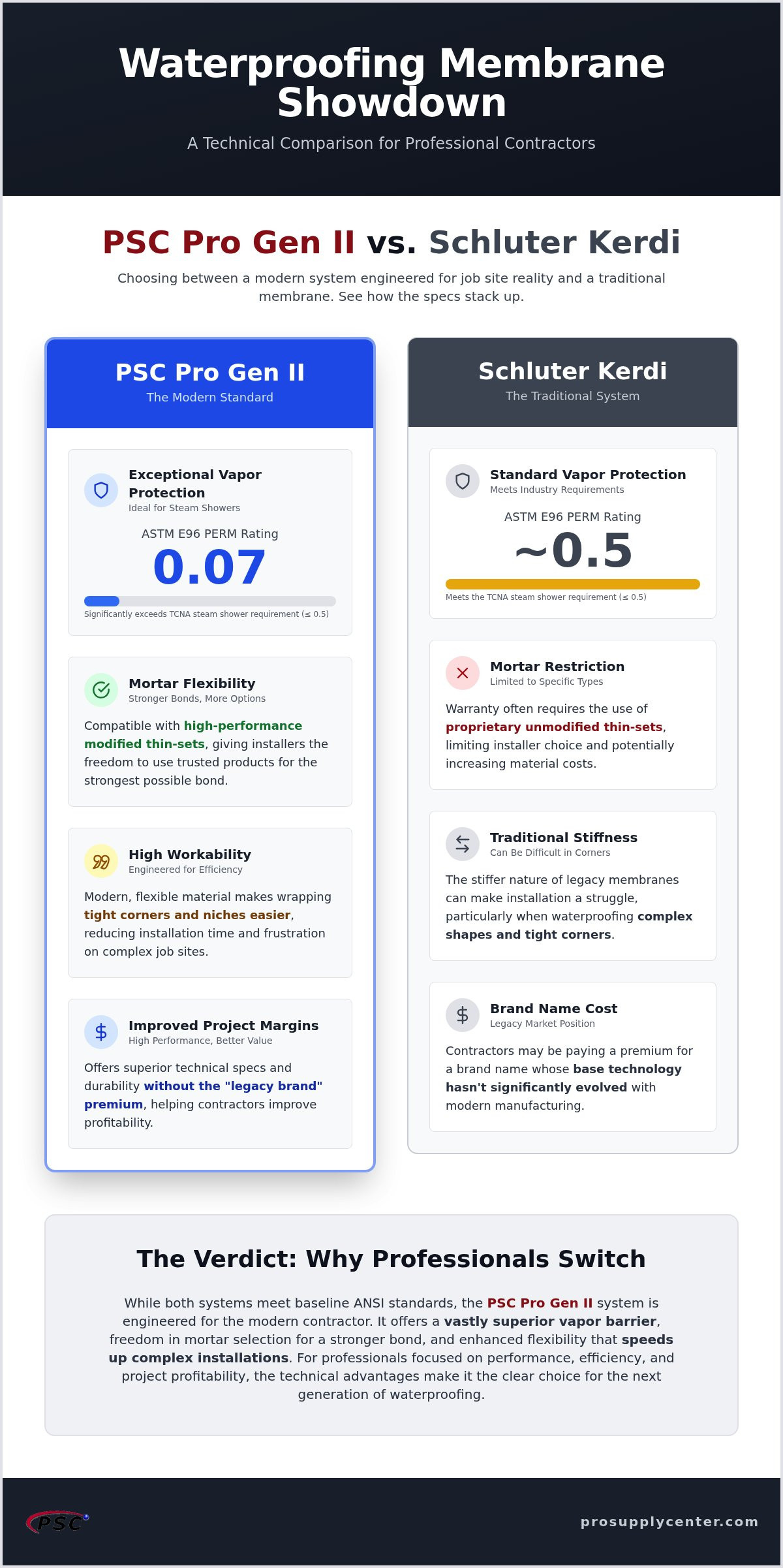
In 2026, project overhead is a constant concern for professionals. When comparing Schluter Kerdi vs PSC Pro, many contractors are looking for ways to improve their margins without sacrificing performance. One common frustration is the stiffness of traditional membranes, which makes wrapping tight corners or niches a struggle. There's also a growing demand for mortar flexibility. While some legacy brands require specific, proprietary unmodified thin-sets to maintain a warranty, modern alternatives often allow for high-performance modified mortars. This flexibility lets installers use the products they trust for the strongest possible bond while saving time on the job site.
Technical Comparison: Schluter Kerdi vs PSC Pro Gen II
Choosing between Schluter Kerdi vs PSC Pro shouldn't be based on which roll is easier to find at a big-box store. It's about the technical data. Both systems meet the ANSI A118.10 standard for load-bearing, bonded waterproof membranes. This certification is the baseline for any professional installation, but the real differences appear when you look at vapor management and tensile strength. A membrane must be thin enough to prevent build-up at the seams yet strong enough to handle the minor structural shifts common as a house settles.
Tensile strength and elongation are critical metrics. If a membrane is too rigid, it can snap under tension; if it's too elastic, it may not provide a stable enough base for large-format tile. The PSC Pro Gen II is engineered to balance these forces, providing a stable substrate that resists punctures during the tiling process. This durability ensures that the waterproof envelope remains intact even when installers are moving heavy tools or sharp-edged tiles across the shower floor. For those looking to secure the transition between these surfaces and the fixtures themselves, a specialized sealing system like TeleSeal can provide the necessary flexibility to handle structural movement and prevent leaks.
Vapor Management and Steam Shower Ratings
Vapor permeance is the most critical metric for modern bathrooms, especially in high-moisture environments. The Tile Council of North America (TCNA) recommends a PERM rating of 0.5 or lower for steam showers to prevent vapor from migrating into the wall cavity. While Kerdi is a reliable standard, the PSC Pro Gen II membrane features a PERM rating of 0.07. This significantly lower rating makes it an exceptional choice for both residential and commercial steam showers where moisture control is non-negotiable. You can find these high-performance specs in the PSC Pro Gen II Waterproofing System, which is designed for projects requiring the highest level of vapor protection.
Bond Strength and Fleece Integration
The mechanical bond between the thin-set and the membrane relies entirely on the fleece-backing. PSC Pro Gen II utilizes a high-density fleece that is specifically engineered to allow for better mortar penetration than standard alternatives. This increased fleece density creates a more robust "tooth" for the thin-set to grab onto. Superior bond strength prevents tile delamination over time by ensuring the entire assembly moves as a single, cohesive unit. When the fleece is integrated correctly into the polyethylene core, it eliminates the risk of the layers separating under the weight of heavy stone or ceramic tile.
The Gen II Difference: Why the Upgrade Matters
When you hear "Gen II," it's easy to dismiss it as a marketing buzzword. In the context of the Schluter Kerdi vs PSC Pro comparison, however, this designation represents a significant shift in material handling and performance. The original bonded membranes were a revolution, but they weren't without flaws. Many early polyethylene sheets were either too stiff to manage in tight corners or so thin they lacked puncture resistance. Gen II technology is a refinement of the core polymer, engineered to provide a more stable, installer-friendly surface that doesn't compromise on its primary job: keeping water out of your walls.
Modern bathroom trends have also pushed these materials to their limits. The rise of large-format tile (LFT) means that even a slight build-up at a seam or corner can lead to noticeable lippage. The Gen II membrane is optimized for these high-stakes installs. It maintains a consistent thickness that allows for standard 2-inch overlaps without creating the "humps" that plague older systems. By reducing the overall profile without losing tensile strength, it provides the flat substrate required for modern aesthetics and heavy stone installations.
Enhanced Workability and Memory Reduction
One of the most persistent frustrations for any tile professional is "membrane memory." This occurs when a roll of material tries to curl back into its original shape after being unrolled. Fighting a curling membrane while your thin-set is skinning over is a recipe for a failed bond. The Gen II system solves this by using a low-memory polyethylene core. It lays flat almost immediately, allowing you to focus on achieving 100% coverage rather than wrestling with the material. This pliability also makes it far easier to fold into corners and over curbs, ensuring that your waterproofing is tight and professional without excessive build-up.
Compatibility with PSC Pro Components
A waterproofing system is only as strong as its weakest connection. The Gen II membrane is designed to work as part of a unified ecosystem. It integrates seamlessly with PSC Pro Gen II shower drains, which feature a rigid flange for a more reliable connection than flexible alternatives. Using a single-source system for your niches, curbs, and membranes ensures that all components share the same thermal expansion rates and chemical compatibility. For contractors looking to streamline their workflow, choosing Schluter Kerdi vs PSC Pro often comes down to this system-wide reliability. You can explore these integrated solutions further with PSC Waterproofing Shower Kits, which provide everything needed for a standard install in one package.
Installation Efficiency: Workability on the Job Site
The real test of any system happens on the job site when the mortar is mixed and the clock is ticking. When evaluating Schluter Kerdi vs PSC Pro, you'll find that the installation steps are fundamentally similar, but the physical handling of the materials differs. Both require a clean, sound substrate. You apply a layer of thin-set using a 1/8" x 1/8" square-notch or a 1/4" x 3/16" V-notch trowel to ensure consistent coverage. The membrane is then embedded into the wet mortar and smoothed with the flat side of the trowel or a drywall knife to remove air pockets. While the process is standard, the PSC Pro Gen II membrane is engineered to be more supple, making it easier to cut with a standard utility knife and fit into tight spaces without the material fighting back.
Flood testing is a non-negotiable step for professional contractors. Most local codes require a 24-hour flood test to verify the integrity of the waterproof seal before tile installation begins. Because the PSC Pro Gen II utilizes a high-density fleece that absorbs less water into the fibers themselves, the drying times for the thin-set beneath the membrane are often more predictable. This allows you to stay on schedule, moving from waterproofing to tiling without unnecessary delays.
Thin-set Mortar Compatibility
The "modified vs unmodified" mortar debate is a significant pain point for many installers. Historically, the industry leader required unmodified thin-set to ensure proper hydration between two non-porous layers. However, modern chemistry has changed the game. The PSC Pro Gen II Waterproofing System is designed for compatibility with high-quality modified thin-set mortars. Modified mortars offer superior bond strength and flexibility, which is vital for long-term durability. By allowing for these versatile mortar applications, PSC provides contractors with more choices at the local supply house while ensuring the system warranty remains intact through proper material selection.
Managing Corner and Curb Transitions
Corners and curbs are the most common failure points in any shower build. The PSC Pro Gen II handles these transitions by maintaining high pliability, which reduces the "build-up" that can lead to crooked tile lines. While site-made corners are possible, using pre-formed internal and external corners significantly speeds up the process and reduces human error. To ensure a completely waterproof seal, all membrane seams and transitions must maintain a minimum 2-inch overlap. This overlap creates a continuous barrier that prevents capillary action from drawing moisture into the substrate. For your next project, you can get all the necessary components by ordering the PSC Pro Gen II Waterproofing System directly.
Verdict: Why Professionals Switch to PSC Pro Gen II
After reviewing the technical data and installation nuances, the conclusion for most trade professionals is clear. While the industry leader built a massive reputation on being the first major bonded system, the Schluter Kerdi vs PSC Pro debate now favors the latter for those prioritizing modern tech and better margins. PSC Pro Gen II isn't just a generic alternative. It's a specialized evolution that addresses the specific workability and vapor management gaps left by older systems. Choosing this system means you're investing in the physical integrity of the build rather than just a recognizable brand name.
The Schluter Kerdi vs PSC Pro comparison reveals that staying with a legacy brand often means paying for marketing rather than innovation. Professionals are switching because they need materials that perform under the pressure of tight deadlines and high moisture loads. The Gen II system provides that stability, ensuring every build meets the highest standards of the trade. It's a pragmatic choice for anyone who understands that the best materials are the ones that make the job easier and the results more permanent.
Cost-Benefit Analysis for Contractors
For high-volume contractors, the decision often comes down to the bottom line. When you calculate the per square foot savings across multiple residential units or large commercial projects, the numbers are hard to ignore. However, the value extends beyond the purchase price. Better workability means your crew spends less time fighting curling edges and more time making progress. Reduced labor hours directly improve your project overhead. Additionally, the superior vapor protection of the Gen II system acts as insurance against moisture-related callbacks. These callbacks are the single most expensive threat to a contractor's reputation and profitability, so using a more advanced membrane is a logical risk-management strategy.
Next Steps for Your Next Project
Transitioning your business to a new system doesn't have to be a gamble. You can start by integrating individual rolls for smaller repairs or jump into full-scale builds with complete kits. These kits ensure every component, from the drain flange to the pre-formed corners, is designed to work together. If you have technical questions about specific job site conditions, you can access comprehensive installation guides and professional support through Pro Supply Center. Taking the time to test the Gen II pliability on a single niche or curb will likely confirm what many in the trade already know: the technology has moved forward. Explore the PSC Pro Gen II Waterproofing System today to see how it can improve your next shower project.
Building a Better Shower System
The evolution of bonded waterproofing has moved past the limitations of legacy materials. When you evaluate Schluter Kerdi vs PSC Pro, it's clear that the Gen II system provides the technical edge required for modern, high-performance showers. You've seen how a lower PERM rating and improved membrane flexibility directly impact the longevity of your work and the efficiency of your crew on the job site.
Transitioning to a system engineered for superior bond strength allows you to maintain higher project margins without sacrificing the quality your clients expect. With full system compatibility across PSC Pro drains and niches, you can build with confidence knowing every component is designed to work together. We facilitate this transition with national shipping across the United States, ensuring you have professional-grade supplies whenever and wherever the job requires. It's a logical step for any professional looking to optimize their workflow.
Upgrade Your Next Install with PSC Pro Gen II
Modernizing your waterproofing process is a pragmatic step toward more reliable results and a more profitable business. Your next successful installation starts with choosing materials that actually perform under pressure.
Frequently Asked Questions
Is PSC Pro Gen II compatible with Schluter Kerdi drains?
Yes, PSC Pro Gen II is compatible with most integrated bonding flanges, including Schluter Kerdi drains. The membrane's fleece-backing allows it to bond securely to the flange using an appropriate thin-set mortar. While it's often best to use a unified system for warranty purposes, the physical compatibility is sound. This flexibility allows contractors to use Schluter Kerdi vs PSC Pro components interchangeably when job site conditions or inventory require a hybrid approach.
Do I need to use unmodified thin-set with the PSC Pro Gen II membrane?
You don't need to use unmodified thin-set with the PSC Pro Gen II membrane. Unlike some legacy systems that require unmodified mortar for hydration, this system is engineered for compatibility with high-quality modified thin-sets. Modified mortars provide a stronger mechanical bond and increased flexibility. This versatility is a major advantage for installers who prefer the performance of polymer-modified products for their tile installations.
Does the PSC Pro Gen II system meet ASTM E96 standards for steam showers?
The PSC Pro Gen II system exceeds the ASTM E96 standards required for residential and commercial steam showers. It features a vapor permeance rating of 0.07 PERMS, which is significantly lower than the 0.5 PERMS recommended by the TCNA for steam environments. This high-performance rating ensures that moisture vapor stays out of the wall cavity. It provides superior protection against long-term structural damage in high-humidity applications.
Can I use PSC Pro Gen II over drywall or does it require cement board?
PSC Pro Gen II can be installed over both drywall and cement board, provided the substrate is structurally sound and meets local building codes. When installing over drywall in a wet area, the membrane acts as the primary moisture barrier. However, many professionals prefer cement board for its superior rigidity and moisture resistance. Always ensure the substrate is clean and free of debris before applying the thin-set and membrane.
What is the main difference between the original PSC Pro and Gen II?
The main difference between the original system and Gen II is the enhanced workability and reduced material memory. Gen II uses a refined polyethylene core that lays flatter during unrolling and folds more easily into tight corners. It also features a higher-density fleece-backing for a more robust mechanical bond. These updates specifically address the workability issues that contractors faced with older, stiffer membranes.
Is a flood test required for the PSC Pro Gen II system before tiling?
A flood test is strongly recommended for the PSC Pro Gen II system before tiling begins. Most industry standards and local building codes require a 24-hour flood test to verify that the shower pan is completely watertight. This step identifies any potential leaks at the drain or corner transitions before they are covered by tile. Performing this test provides peace of mind and protects your reputation from expensive moisture-related callbacks.
How does the thickness of PSC Pro Gen II compare to Schluter Kerdi?
The thickness of PSC Pro Gen II is approximately 8 mils, which is comparable to the standard thickness of Schluter Kerdi. This thin profile is intentional, as it prevents excessive build-up at the seams and corners where the membrane must overlap. In the Schluter Kerdi vs PSC Pro comparison, both membranes are thin enough to ensure a flat substrate for tile while remaining thick enough to provide reliable puncture resistance.
Are there pre-formed corners available for the PSC Pro Gen II system?
Yes, there are pre-formed internal and external corners available for the PSC Pro Gen II system. Using these pre-manufactured components is much faster than cutting and folding corners from a flat sheet. They ensure a consistent, waterproof seal at the most vulnerable points of the shower. These corners integrate seamlessly with the main membrane to create a continuous, professional-grade waterproof envelope for the entire shower.


